


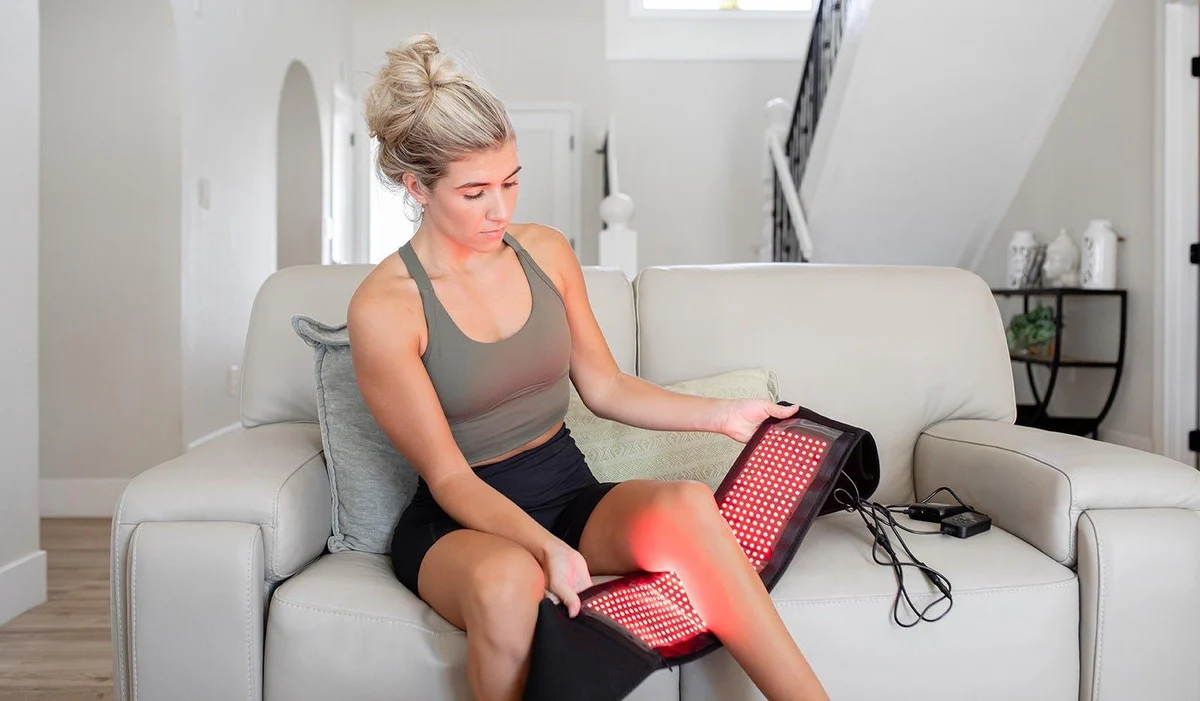
Red light therapy started out almost exclusively in clinics, dermatology offices, physical therapy practices, places with a professional operating the equipment and a price tag to match. Over the past several years, that changed. Panels and masks shrank, prices dropped, and the technology found its way onto bedroom floors and home gym walls, sold direct to anyone willing to research a purchase and press start on their own.
Most red light therapy companies are still running that same at-home playbook: build a device, sell it direct to consumer, hope word of mouth carries the rest. Mito Red Light just did something different. It took the technology a step further, out of the living room and into the gym
The Move Into Commercial Space
Crunch Fitness Mesquite has opened a dedicated Mito Red Light therapy room inside its Recovery & Relaxation space, making it the first Crunch location to launch the partnership. The commercial installation brings red light therapy directly into the member experience rather than treating it as a bolted-on wellness perk. Mesquite is serving as the flagship location, with additional Crunch locations expected to follow.
On the surface, this reads like a wellness story. Look closer, and it’s a distribution strategy
Why This Counts as a Business Move
Direct-to-consumer wellness brands run into a familiar ceiling. The product works, the reviews are good, but growth eventually slows because it depends entirely on someone deciding to research, compare, and buy a device sight unseen. Getting a stranger to spend real money on a piece of recovery equipment they’ve never touched is a hard sell, no matter how strong the marketing is
Embedding the product inside a gym members are already paying to use solves that problem differently. Crunch members can walk into the Recovery & Relaxation space and try it as part of a membership they already have. That’s a try-before-you-buy funnel built into daily gym traffic, something online advertising alone can’t replicate. It also puts the brand in front of a customer base already committed enough to fitness and recovery to pay for a membership in the first place.
For a category built on consumer trust and unfamiliar technology, that kind of hands-on exposure carries weight
Building the Product Line on One Front While Expanding Distribution on the Other
The Crunch partnership isn’t happening in isolation. Mito Red Light has also been rounding out its consumer product line, a sign the company is expanding on two fronts at once, not betting everything on a single commercial deal
The MitoQUAD Wavelength Belt marked a real departure from the panel format that’s defined most of the category. Instead of a stand-in-front-of-it panel, MitoQUAD delivers red and near-infrared light therapy through a wearable belt, using four wavelengths, 1,215 LED chips, and five intensity levels. It was built for the kind of soreness that doesn’t happen in a controlled setting: sore backs and legs after travel, workouts, or long days on your feet, and it targets areas a standing panel can’t reach as easily.
Alongside that, the MitoPRO 300X panel rounds out the higher-end side of the lineup. It delivers six wavelengths across amber, red, and near-infrared light, more range than the basic two-wavelength panels that dominate much of the market. TruDUAL chip technology lets users choose red light, near-infrared light, or both, and touchscreen controls and app compatibility give users a level of customization still uncommon in the category. It’s also HSA/FSA-eligible, a detail that matters more to a company thinking about long-term category adoption than one focused purely on a single sales cycle.
Between a wearable format built for travel and everyday soreness and a higher-end panel built for serious at-home recovery routines, the product side of the business is filling out a real range instead of leaning on one flagship item
The Bigger Signal for Wellness Tech
The at-home recovery category has spent the last few years competing almost entirely on product specs: more wavelengths, more LEDs, better apps. Mito Red Light’s move suggests the next phase of growth in this space might come from somewhere else entirely: getting the device in front of people before they ever have to decide whether to buy one
Mito Red Light has confirmed additional Crunch locations are expected to follow Mesquite, suggesting this is built to scale rather than sit as a one-off pilot. For a category that’s spent years competing on spec sheets, getting the device in front of people before they ever have to buy one might be the smarter business move
