


- News
- lifestyle
- beauty
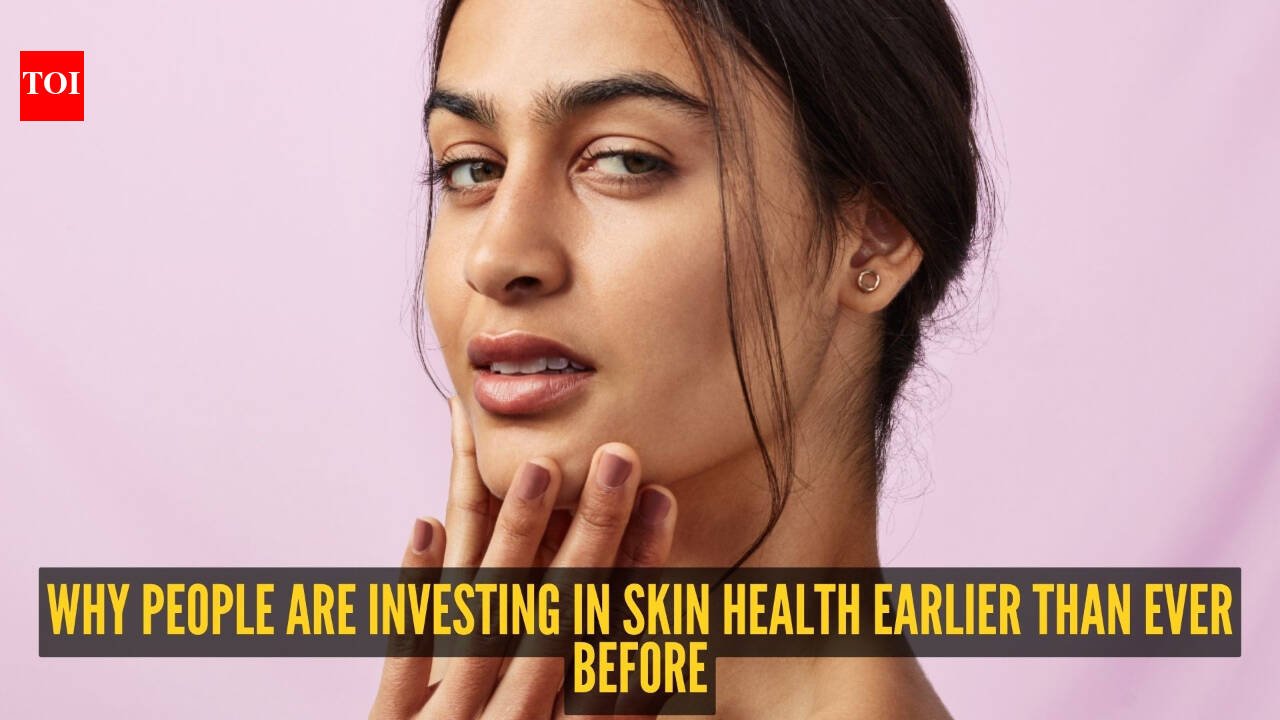
- The longevity revolution: Why people are investing in skin health earlier than ever before
The longevity revolution: Why people are investing in skin health earlier than ever before
1/7
Forget anti-ageing at 40: The longevity revolution begins in your 20s
A few years ago, most people walked into my clinic wanting to fix something, a line that had deepened, a jawline that had softened, a face that no longer looked like the one they remembered. Today, that conversation has changed. My patients are younger, more informed, and far more interested in a different question altogether: how do I make sure I don’t need correction later?
That shift, from fixing to preserving, is what I’d call the longevity revolution in aesthetics. And it’s not a passing trend. It’s a fundamental rewrite of how people think about ageing, beauty, and what it actually means to take care of yourself. Dr. Aisshwarya Panddit, Celebrity Cosmetic Doctor & Founder, AuraEdge Aesthetic and Wellness, shares insights on why people are investing in skin health earlier than before.
by TOI Lifestyle Desk

2/7
From correction to prevention
For the longest time, aesthetic medicine was reactive. You waited until something bothered you, and then you treated it, often aggressively, to reverse years of change in a single sitting. What I’m seeing now, especially among patients in their late twenties and early thirties, is a completely different mindset. They’re not waiting for damage to show up. They want to understand their skin at a cellular level and intervene early, gently, and consistently.
This is where regenerative medicine and regenerative aesthetics have genuinely changed the game. Instead of masking signs of ageing, we’re now able to work with the body’s own repair mechanisms, supporting cell regeneration and natural rejuvenation rather than overriding them. It’s a quieter kind of intervention, but a far more sustainable one
3/7
Why skin health is becoming a long-term investment
I often tell my patients that skin isn’t just an appearance concern, it’s an organ, and like any organ, its long-term health depends on what you do for it years before problems become visible. Preventive aesthetic care, things like collagen regeneration through bio-stimulators, ultrasound-guided facial optimisation, and precision-led treatments, are essentially ways of banking skin quality early, so that ageing becomes a gentler, slower process rather than something to combat later with more dramatic measures.
This is also why I’ve become such a strong advocate for precision over volume. Advanced injectables and facial mapping today allow us to be extremely specific, treating exactly what needs support rather than defaulting to broad, one-size-fits-all approaches. Combined with a strong understanding of facial anatomy, this precision is what separates thoughtful, science-backed treatment from guesswork.
4/7
The return of restraint
Interestingly, as people invest earlier in their skin health, I’m also seeing a strong return to restraint. Micro-dosing and natural Botox approaches have become far more popular than the overfilled, overdone results that once defined the industry. Patients don’t want to look different, they want to look like a well-rested, well-cared-for version of themselves. Facial harmonisation, rather than facial alteration, has become the goal.
This is deeply tied to how I think about my own practice. My philosophy has always centred on subtle enhancement over transformation, and what’s reassuring is that this is no longer a niche preference, it’s becoming the mainstream expectation. Today’s beauty consumer is sophisticated enough to recognise that natural-looking results are actually harder to achieve than dramatic ones, and they value the skill that goes into getting there.
5/7
Technology is making personalisation possible
None of this would be achievable at scale without the technology that’s now available to us. Personalised, technology-driven aesthetic treatments mean we’re no longer treating every patient with the same protocol. We can assess individual skin quality, ageing patterns, and anatomical structure, and build a plan that’s genuinely specific to that person’s timeline and goals. This is a significant departure from the aesthetic medicine of even a decade ago, and it’s a big part of why younger patients trust the process more readily. It doesn’t feel like a generic fix, it feels like a considered plan.
6/7
Why edmical credibility matters more than ever
As this space grows, and frankly, as more players enter the beauty and wellness industry, medical credibility has become non-negotiable. Advanced anatomical training, an understanding of long-term skin science, and a genuine ethical commitment to patient outcomes over trends are what should guide any aesthetic decision. My own approach has always been to educate patients first, help them understand what’s actually happening beneath the surface, before recommending any treatment at all.
7/7
Where this is headed
The future of aesthetic medicine, as I see it, isn’t about newer, more dramatic procedures. It’s about earlier, smarter, more personalised care that supports skin health over decades rather than correcting damage after the fact. People are beginning to understand that investing in skin longevity in your late twenties or early thirties isn’t vanity, it’s simply an extension of the same preventive thinking we’ve long applied to fitness or nutrition.
Ageing, ultimately, isn’t something to fight. It’s something to age into well. And the earlier we start thinking that way, the better the outcomes, for skin, and for how confidently people carry themselves through every decade that follows
Follow Us On Social Media
Photostories
MORE FROM ETIMES
life & style
Krishna Janmashtami WishesConfucius QuoteJennifer GarnerJack NicholsonBaby Names
