

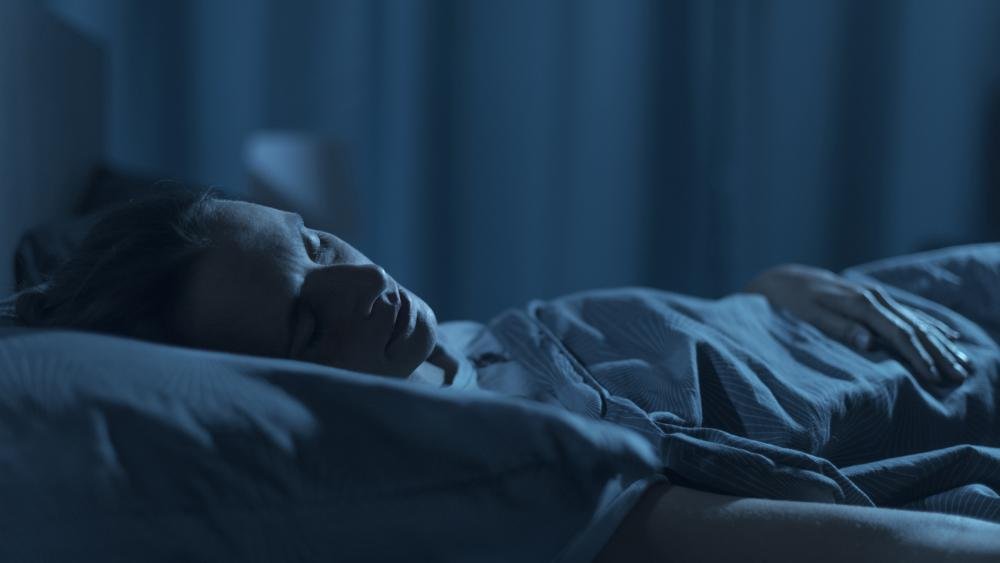
UNIVERSITY PARK, Pa. — Between college dormitories and cramped apartments, young adults often live in environments that can be loud, bright or uncomfortable, making it difficult to reliably get a good night’s sleep, according to Adwoa Dadzie, doctoral candidate in biobehavioral health at Penn State. Despite some people’s perception that young people do not need much sleep, a poor sleep environment affects young adults’ sleep quality, according to a new publication led by Penn State researchers, and that could influence their health over the long term.
The new study, recently published in Sleep Health, examined how young people were affected by disturbances where they sleep. Young adults reported that the sleep environment — specifically a bedroom that was too bright, hot or noisy — disrupted sleep quality but not how long they slept. A bedroom was too cold did not affect sleep in a way that could be measured using objective data
“Young adults often have little control over their sleep environments,” said Dadzie, the first author of the study. “But habitual sleep disruptions can affect long-term health and development. Sleep is most often studied in older adult populations, and we wanted to know whether young adults responded differently than older adults to factors that could alter their sleep. This is important to understand because a few simple changes — like ear plugs or blackout curtains — might dramatically improve a person’s sleep quality if they routinely go to bed in a loud or bright environment.”
A good night’s sleep cannot be measured solely by how many hours a person sleeps. Factors like how long it takes someone to fall asleep, how often they wake up and how long they remain awake during the night are all dimensions of sleep quality. A person who is in bed for a long time with low sleep quality might be less rested than a person who gets a moderate amount of high-quality sleep, the researchers said.
The researchers analyzed data from 372 young adults with an average age of 22 who participated in the Future of Families’ Young Adult Sleep Study. Every morning for 14 days, participants reported on how well they slept and whether light, noise and temperature disrupted their sleep
Participants also wore a sensor on their wrist to objectively document when they were asleep, how long it took to fall asleep, how long and well they slept and when
When a person’s sleeping area was too bright, they fell asleep later, experienced poorer quality sleep and were awake more during the night. When the sleep environment was too hot or too noisy, participants experienced poorer sleep quality as measured both by their own reports and the wrist-worn sensor
“Noise can be especially problematic for sleepers because parts of our brain stay vigilant to our environment during sleep, especially noises of something that could be a threat,” said co-author Orfeu Buxton, Dadzie’s doctoral adviser and professor of biobehavioral health at Penn State
What was surprising, according to the researchers, was that the sleep environment did not affect how long people slept. Though further research is needed, the researchers said they suspected that young people could compensate for disruptions during the night because they may have more flexibility to sleep in
The researchers said they intentionally focused on the perception of environmental factors rather than objective measures like decibels, lumens and degrees because the experience of what disrupts one’s sleep is personal and not based on an objective threshold. Other studies have shown that objective measures can also capture environmental disruptors of sleep
“I grew up in New York City,” Dadzie said. “So, what might qualify as normal background noise to me might seem extremely loud to someone who grew up in a rural area.”
Buxton, who is also associate director of the Penn State Social Science Research Institute, said this research is important because young adulthood is a critical developmental period
“Human development is typically based on things we learn when we are young,” said Buxton, who is also associate director of the Penn State Clinical and Translational Science Institute. “If you eat your vegetables as a child, you will probably eat them as an adult. Similarly, if you develop good sleep habits as a young adult, it is less likely that accumulated sleep loss will affect you later in life.”
The researchers emphasized that people who cannot control their environment can often take steps to address potential sleep disruptions. Buxton and Dadzie recommended ear plugs, noise-cancelling devices or cotton to block noise and sleep masks or blackout curtains to block light
Other Penn State researchers who contributed to this study include Yuqi Shen, doctoral candidate in biobehavioral health; Lindsay Master, former researcher in biobehavioral health; Timothy Brick, associate professor of human development and family studies; and Anne-Marie Chang, associate professor of biobehavioral health
David Reichenberger of the Department of Psychiatry at University of Arizona; Angel Collie of the Department of Clinical & Health Psychology at University of Florida; and Gina Marie Mathew and Lauren Hale of the Department of Family, Population, and Preventive Medicine in the Renaissance School of Medicine at Stony Brook University also contributed to this research
The research was supported by the Eunice Kennedy Shriver National Institute of Child Health and Human Development of the National Institutes of Health under award number R01HD073352-10, as well as a consortium of private foundations. The content is solely the responsibility of the authors and does not necessarily represent the official views of the funders
At Penn State, researchers are solving real problems that impact the health, safety and quality of life of people across the commonwealth, the nation and around the world
For decades, federal support for research has fueled innovation that makes our country safer, our industries more competitive and our economy stronger. Recent federal funding cuts threaten this progress
Learn more about the implications of federal funding cuts to our future at Research or Regress
Last Updated September 30, 2026
Contact
Aaron Wagner
- atw14@psu.edu
