


AMA News Wire
What doctors want patients to know about improving gut health
Mar 17, 2023
A healthy gut is essential for overall health and well-being, establishing proper digestion, metabolism and immunity. Meanwhile, poor gut health has been linked to a range of health conditions, such as inflammatory bowel disease, irritable bowel syndrome, allergies and mental health disorders. But understanding how to maintain a healthy gut can set patients’ digestive health on the right track.
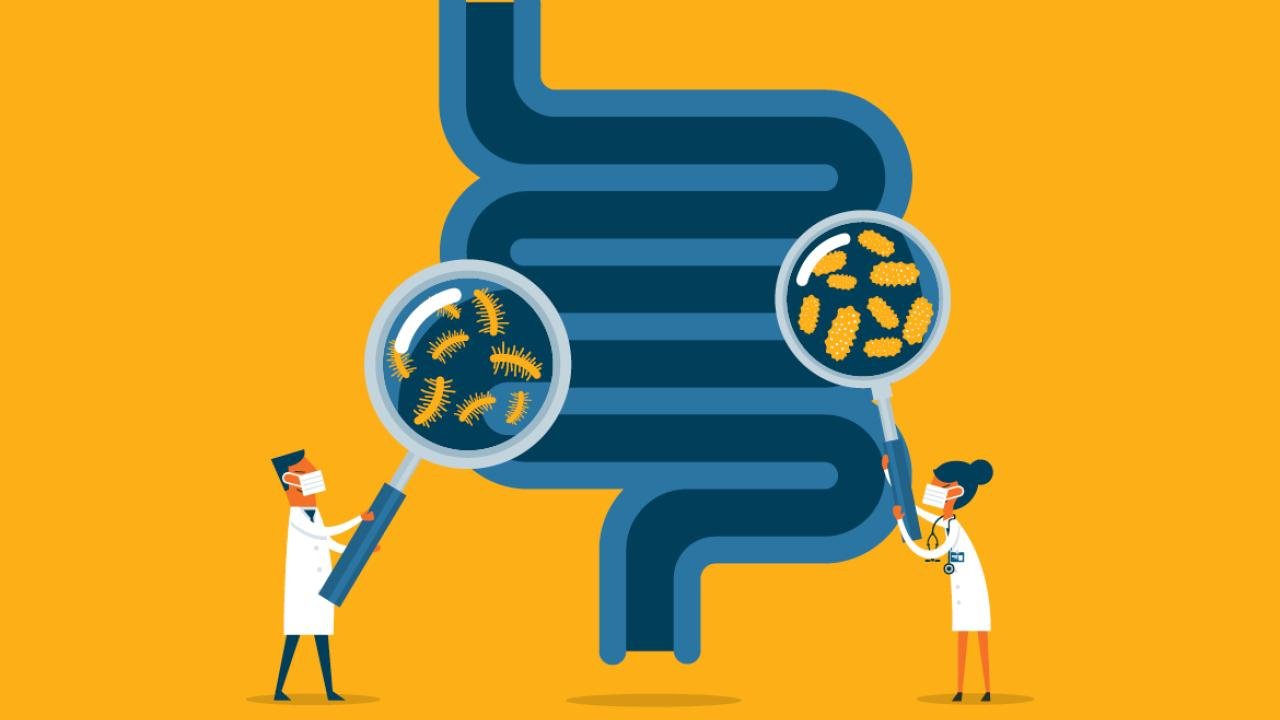
Gut health refers to the well-being of the digestive system, which is responsible for breaking down food, absorbing nutrients and eliminating waste from the body. It is home to trillions of microorganisms—including bacteria, viruses and fungi—that are collectively known as the gut microbiome
The AMA’s What Doctors Want Patients to Know™ series provides physicians with a platform to share what they want patients to understand about today’s health care headlines
In this installment, March Seabrook, MD, a gastroenterologist in private practice in West Columbia, South Carolina, and delegate in the AMA House of Delegates for the American College of Gastroenterology, discusses the importance of gut health
Keep an eye out for symptoms
“When someone presents to the gastroenterologist, the symptoms that are going to make us raise the antennas to look at the microbiome are people who often have irritable bowel syndrome symptoms,” Dr. Seabrook said. “They may have bloating, diarrhea and abdominal pain. Those are the triad of symptoms that will make us at least consider if there is something going on with the microbiome in that individual.”
“So, diarrhea is without blood and there’s not a fever or associated weight loss with that,” he said. “Because if there are bloody stools, then you have to think about what else can be going on with an individual
Get tested if symptoms persist
“From a symptom standpoint, if somebody says they have no abdominal pain, no nausea or vomiting, have had one brown, formed bowel movement a day and feel great, then obviously we don’t look for any biome issues,” Dr. Seabrook said. “But if they present with unexplained abdominal bloating or gas, diarrhea and abdominal pain, that is a red flag to me as a gastroenterologist
“It depends on their age, other symptoms and family history, but I’m going to think this may be the gut microbiome, but for goodness’ sake I’ve got to make sure you don’t have colon cancer or diverticulitis or colon polyps,” he added. That is when “we will investigate by doing a colonoscopy or even an upper endoscopy, depending on the patient’s symptoms. Then there are stool studies as well.”
For example, “one of the stool studies that we often do is something called a fecal calprotectin and that is a surrogate marker for inflammation in the gut,” Dr. Seabrook said. “So, somebody with diarrhea that is not bloody, and the fecal calprotectin is elevated, it’s not a slam dunk, but if the fecal calprotectin is elevated, then that makes us worry about an inflammatory condition within the colon.”
Pay attention to bowel pattern change
“Normal bowel behavior is to have a bowel movement anywhere from once every three days to three times a day,” Dr. Seabrook said. “On that bell shaped curve is once a day, but the variation between three times a day and once every three days is pretty large.”
“So, if a patient says they have always had two bowel movements a day for all of their adult life, and now they are having one bowel movement every two days, then—even though those are both considered normal in terms of frequency—that is a change in bowel pattern,” he explained. “That’s something I don’t ignore.”
“Everybody does have a signature microbiome, but it’s billions and billions of microorganisms that live in the gut and it starts from birth,” Dr. Seabrook said. “There is variation, but when the microbiome goes sideways—if you will—is when you start having some digestive issues.”
“The classic microbiome shift—in terms of disease—is clostridium difficile, or C. diff. It’s most associated with antibiotic use,” he said. “What that does is that causes a shift in the microbiome, which is called dysbiosis—a change in the composition or the diversity of the microbiome
“With antibiotics, how they kill certain bacteria can cause dysbiosis, which is what allows organisms like clostridium difficile to propagate and become symptomatic in terms of an infection that produces a toxin that can be a life-threatening disease,” Dr. Seabrook added, noting “that’s becoming harder and harder to treat.”
“When a patient comes in with the three symptoms of diarrhea, bloating and gas that are unexplained, I will often put them on probiotics,” Dr. Seabrook said. “If you look at the research, there’s not that many diseases that we know with confidence that probiotics really make things better.”
“And when people come in with those three symptoms especially and we know they don’t have colon cancer, ulcerative colitis or Crohn’s disease, that is when I recommend a trial of probiotics—the good bacteria for the gut—to see if it helps,” he said. “If they don’t do better, then I’ll do more. And that’s where I’ll start with a lot of people.”
“If symptoms get better with the probiotics once a day, then play around with it. If you’re doing better, take it every other day or every third day to see how you do,” Dr. Seabrook said, reiterating that “probiotics are the good bacteria for the gut and those include things like lactobacillus and Bifidobacterium and something called saccharomyces
“The prebiotics are undigestible carbohydrates that are compounds within foods that help the good bacteria do even better,” Dr. Seabrook said, emphasizing “their compounds induce the growth and activity of the good bacteria of the gut.”
“There is also a combination of prebiotics and probiotics—called synbiotic—that are good too,” he said. “But the prebiotics help the good bacteria grow even more.”
Skip gluten if it upsets your stomach
“We, as a country, eat a heavily processed diet … but the good news is we’re learning more about food intolerance and what helps,” Dr. Seabrook said. “We know about lactose intolerance, and we are testing all the time for celiac disease and gluten sensitivity.”
“With celiac disease, there are things that we can objectively look for. There’s a blood test called tissue transaminase that we can use to check and then we can take biopsies of the small intestine where gluten is absorbed,” he said. “Now if they’re positive, then we say you have celiac disease, but then there’s a large group of people who we may do both those tests and they’re both normal.
“Then they say that if they eat gluten, they feel bad. And if they don’t eat gluten, they feel good,” Dr. Seabrook added. “That’s where we get into this nonceliac gluten sensitivity, which means: If it bothers you, stay away from it.”
“At some point we will have another name for it or we’ll find some test that is positive for people who have that. We just don’t know it yet,” he said. “That’s when it gets into good judgment about what you eat. So, stay away from what upsets your stomach.”
Eat a well-balanced diet
When it comes to improving gut health, it is important to “eat right, exercise and drink plenty of water,” Dr. Seabrook said. “That’s generally what most physicians will recommend for most people.”
“From a pure nutritional value as opposed to stimulating anything in your colon, eat vitamin and fiber rich foods, fruits and vegetables, but also make sure it is a well-balanced diet,” he said. “Mostly, it’s in the balance of what you eat and limiting a lot of processed foods.”
“A high fiber diet is important for those who have diarrhea and for those who may be constipated,” Dr. Seabrook said, adding that “fiber is hydrophilic, which means loves water.”
“So, in people who have loose, watery stools, the fiber soaks up the excess water because it attracts water. It makes the stool less loose,” he explained. “Then the people with constipation—especially with hard, dry stools that may be difficult to evacuate—the fiber keeps water within the stool and it keeps it softer and easier to evacuate
“Bananas causing an upset stomach is not an uncommon thing,” Dr. Seabrook said. “Some people actually get a little bit more constipated with bananas. Then some people get a little bit more diarrhea with bananas. And others just say they hurt their stomach.”
“It’s just like any food tolerances. While we can’t pinpoint the reason why, if it upsets your stomach, try to avoid it,” he said
Breastfeed for your baby’s gut health
“There’s no doubt that breastfeeding—with the immunoglobulins that are in the breast milk—is just healthy overall and good for the immune system of an infant,” Dr. Seabrook said. “And that will include the gut as well.”
“It takes a while to go from a relatively sterile gut to forming the signature microbiome of an individual,” he said. “But it seems that breastfeeding is beneficial for the infant even beyond gut health.”
Visit doctor if bowel habits change
“With unexplained abdominal pain, weight loss, blood in your stool and with a change in bowel habit, contact your doctor,” said Dr. Seabrook. “Before I do a colonoscopy, I always ask if the patient has had any unexplained change in bowel behavior, blood in stool, weight loss or abdominal pain.”
“Now, there are other reasons to see a gastroenterologist from the luminal digestive tract, meaning the esophagus, stomach, small intestine and large intestine,” he said. “Unexplained weight loss is oftentimes related to the gastrointestinal tract, so that should be evaluated
“If people have trouble with swallowing, have a lot of heartburn and reflux, are throwing up blood or have persistent nausea or vomiting that’s not related to some transient illness, those are the common things that we see patients for,” Dr. Seabrook added

What Medicaid patients must know about new coverage rules
Oct 15, 2026
|

When health technology works, patients and physicians get time back
Oct 12, 2026
|

Small grants give physicians time to improve daily work
Oct 20, 2026
|
What doctors want patients to know about food poisoning
Oct 16, 2026
|
