


Desire for better sleep creating opportunities around world
Market spans mattresses, smart devices made to improve sleeping experiences
By ZHENG YIRAN in Shanghai |
China Daily |
Updated: 2026-10-26 08:14


Share – WeChat
Chinese sleep technology companies are expanding overseas as consumers worldwide pay greater attention to sleep health, creating opportunities for businesses that combine intelligent manufacturing, artificial intelligence and personalized sleep solutions
The shift is taking the industry beyond traditional bedding, with companies seeking to differentiate themselves through smart products, sleep research and localized services. But turning growing interest in better sleep into sustainable overseas growth will require more than simply exporting products. Chinese brands must also understand local preferences, establish distribution networks and build consumer trust.
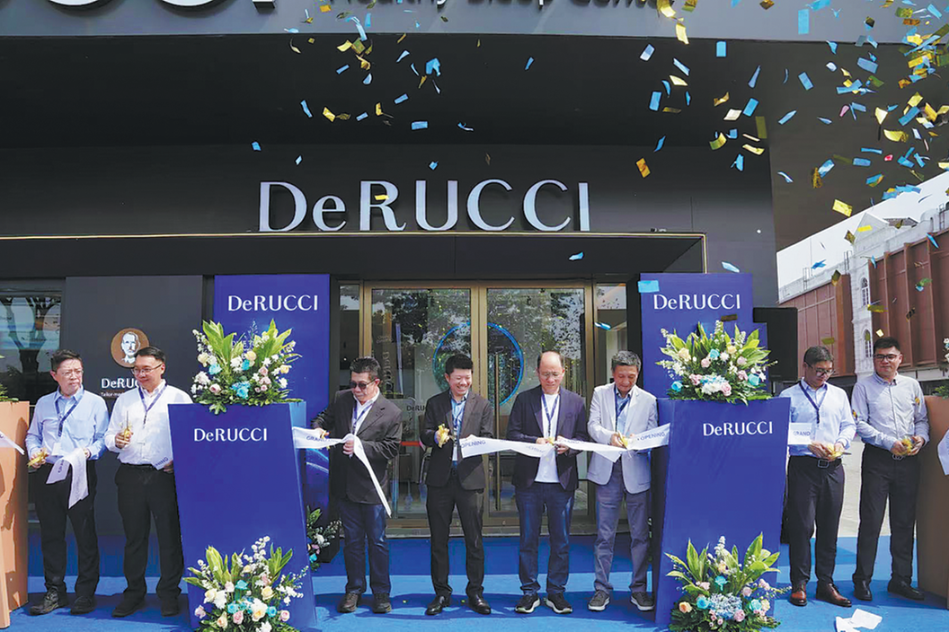
At the 31st China International Furniture Expo in Shanghai on Sept 8, a smart mattress equipped with a chip attracted attention from visitors to the booth of Chinese sleep technology brand DeRucci. The mattress can automatically adjust to a user’s sleeping posture to form a body-fitting curve, while its intelligent system can learn and evolve to provide a more personalized sleep experience. About one-third of visitors to the company’s booth were international, according to DeRucci, with many showing interest in the smart mattress and its sleep technology.
“Sleep health is a common concern around the world,” said David Wu, assistant president of DeRucci and general manager of its overseas markets. However, consumers’ sleeping habits and preferences vary with lifestyle, climate and cultural background. Consumers in Western markets tend to prefer softer mattresses with a more enveloping feel, while Asian consumers have traditionally favored firmer support, he said.
DeRucci combines its experience in sleep research, intelligent manufacturing and brand development with localized products and services to adapt to different markets. The company began expanding overseas around 2014, with Australia among its first international markets. It now operates in Australia, New Zealand, the United States, Canada, Singapore, Indonesia, Malaysia, Vietnam and other markets
According to the company’s 2026 interim report, DeRucci had 53 overseas stores as of June 30. It has developed its international business through a combination of direct retail operations, local partnerships and supply-chain development, rather than applying a single model to all markets
In Southeast Asia, DeRucci acquired Singapore-based home furnishing company MIPL, whose brands include Maxcoil, along with MIPL’s production facility on Indonesia’s Batam Island. The acquisition in 2023 strengthened the company’s manufacturing and supply-chain capabilities in the region. In markets such as Australia, the United States and Canada, it has focused on introducing its sleep products and brand while adapting to local preferences for quality, design and service.
Wu said cooperation with established local partners is central to the company’s overseas strategy. Local partners bring knowledge of consumer preferences, distribution networks and market conditions, while DeRucci contributes its products, technology and brand capabilities
The company’s overseas business revenue reached 260 million yuan ($38.92 million) in 2025, up 67.37 percent year-on-year, according to its 2025 annual report
The company’s experience reflects a wider opportunity for Chinese sleep technology businesses as the global market evolves. Hou Wenjie, secretary-general of Shanghai-based research institute Yu Ce Think Tank, said the rise of the sleep economy reflects consumers’ growing emphasis on sleep quality as part of health and quality of life. The market spans mattresses, smart devices and other products designed to improve sleep, he said.
Chinese companies have advantages in manufacturing, integrated supply chains and the ability to bring innovations into mass production, Hou said. Working with local businesses can also help them adapt to overseas markets and establish distribution networks
Guo Tao, an independent angel investor and an artificial intelligence expert with more than 20 years of experience, said the overseas sleep market is shifting from traditional bedding purchases toward a longer-term sector centered on health and smart technology
Consumers increasingly want more than basic mattress support and are showing interest in features such as automatic adjustment and sleep monitoring, Guo said. The ability of Chinese companies to integrate AI and sensor technologies into consumer products, together with their supply-chain and cost-control capabilities, can help them compete with established bedding manufacturers. Their experience in China’s competitive domestic market can also support the development of retail formats centered on product demonstrations and consumer experience, he said.
zhengyiran@chinadaily.com.cn
Photo
Second phase of 140th Canton Fair opens in Guangzhou
 National Day holiday fuels tourism, culture boom
Tu’er Ye (the Rabbit God): A Mid-Autumn blessing for family reunion
 Pop Land City Carnival Tour arrives in Shanghai
 Gansu’s traditional medicine industry embraces tech and global markets
 China International Big Data Industry Expo showcases data achievements in Guiyang
Most Viewed in 24 Hours
‘);
/*]]>*/
State Council News
China’s economy in first three quarters of 2026
A look at China’s economy in first 3 quarters, 2026
Top 10
 Top 10 countries attracting Chinese tourists
Business focus
Sci-tech helps increase crop yields at demo park in Hubei
Innovation drives agri-growth
China Data
 Improving demand fuels Q3 growth
SOEs
China sets up National Data Group to develop data resources
SOEs return more profits to State
Special
WIC Wuzhen Summit
2026 CIFTIS
