


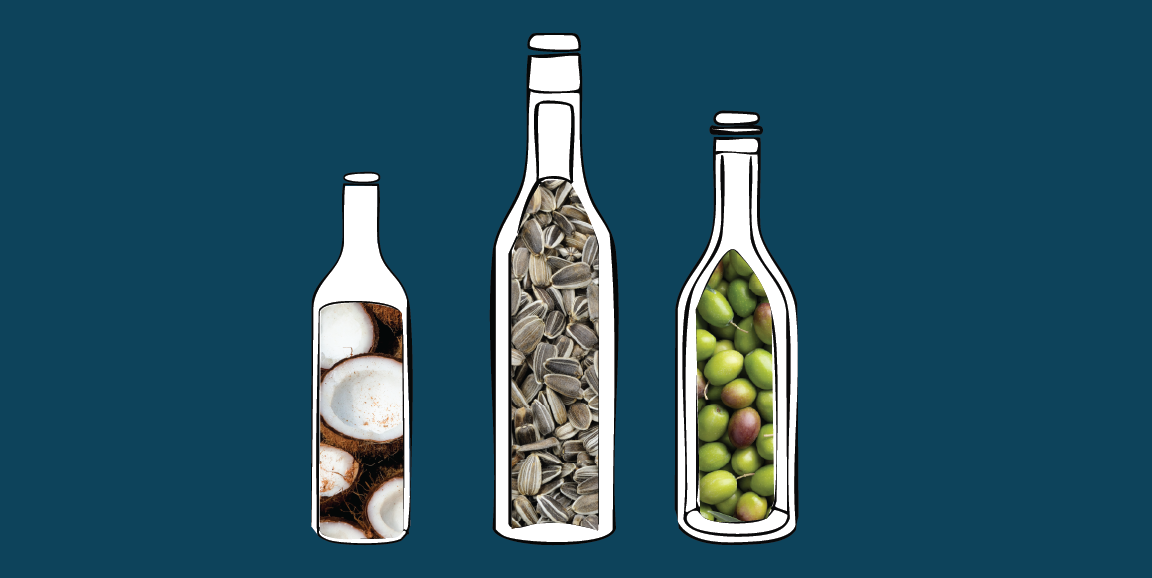
When you scramble breakfast eggs in canola oil, order fast-food fries, or pour commercial dressing onto your salad, you’re consuming seed oils. A blanket term for any vegetable oil extracted from the seeds of plants, seed oils include sunflower oil, canola oil (which is made from rapeseed), soybean oil, corn oil, safflower oil and grapeseed oil. Most seed oils are affordable, easy to cook with and mildly flavored, making them a staple ingredient in home kitchens, restaurants and processed food production.

Christopher GardnerBy Kurt Hickman
Recently, however, seed oils have become a focal point in public discourse, thanks to a surge of viral social media posts claiming that the oils are toxic or unhealthy and contribute to the obesity epidemic
Christopher Gardner, PhD, the director of nutrition studies at the Stanford Prevention Research Center, has studied the effect of dietary changes — including oils and fats — on health for more than three decades. He has also served as the chair of the American Heart Association’s Nutrition Committee
We asked Gardner, the Rehnborg Farquhar Professor, what an average American should know about seed oils and their effects on health. He said that most of the claims about seed oil as harmful are misguided and that other dietary changes — such as avoiding ultra-processed foods and eating enough fruits and vegetables — will have bigger health benefits than focusing on the oils
Here are five things Gardner said consumers should know about seed oils
As a graduate student in 1995, Gardner analyzed more than a dozen studies on the effects of different types of dietary fats on cholesterol levels. For years, scientists have studied the difference between saturated fats that are solid at room temperature — think butter, lard and beef tallow — and unsaturated fats that are liquid at room temperature, including seed oils
Like many researchers before him, Gardner found that people who switched from using mostly saturated fat in their diets to eating more unsaturated fats saw their LDL cholesterol levels decrease. High levels of this type of cholesterol are associated with an increased risk of cardiovascular disease
“Every study for decades has shown that when you eat unsaturated fats instead of saturated fats, this lowers the level of LDL cholesterol in your blood,,” Gardner said. “There are actually few associations in nutrition that have this much evidence behind them.”
Large studies tracking tens or hundreds of thousands of people over decades (including one published this month) have found associations between eating more unsaturated fats — and less saturated fats — and lower death rates, he added
Much of the recent criticism of seed oils centers on their omega-6 fatty acid content, with claims that these fatty acids promote inflammation. Gardner said this idea is not backed up by science
Omega-3 and omega-6, both found in fish, seeds, and nuts, are essential fatty acids, meaning our bodies require them but cannot produce them. So we must get them through our diets. While omega-3s are suspected to have anti-inflammatory properties, omega-6 fats play important roles, too
“The omega-3s seem to be a little more anti-inflammatory than the omega-6s,” Gardner said. “But somehow, this has been flipped into saying the omega-6s are pro-inflammatory. That isn’t the case. Just because research suggests that omega-3s have stronger anti-inflammatory effects doesn’t mean omega-6s are harmful.”
In fact, apart from eating fish or flax seeds — it is difficult to get omega-3 fats in your diet without some omega-6s, as all other foods that are
Getty Images
For decades, Gardner has hoped to find links between diet and inflammation but he said the immune system is still too poorly understood to make these kinds of associations when studying humans. So he is immediately skeptical of claims that seed oils cause inflammation — the body’s natural immune response to injury, infection or stress. His skepticism, he said, comes largely from the fact that there is no single test a doctor can order that fully captures the concept of inflammation.
“Measuring inflammation with any current laboratory tests is incredibly complex and just can’t be done yet,” he said. “There are hundreds of immune markers, and we really don’t know which ones are signs of a healthy immune system.”
Because there is a lack of agreement on what the best metrics for inflammation are, and a poor understanding of what types and levels of inflammation are appropriate for a healthy immune system, Gardner said it is inappropriate for any food — whether seed oils, omega fats, or something else — to be unquestionably dubbed anti- or pro-inflammatory.
The rise in seed oil use and consumption has paralleled increases in obesity and chronic disease. But Gardner said this correlation could be caused by other factors. Diets high in ultra-processed foods, for instance, are associated with cardiovascular disease, diabetes, and many other health conditions, and these ultraprocessed foods often contain seed oils. Research has suggested that these associations are best explained by the presence of additives, sugar and sugar substitutes, nitrates, and overall nutrient profiles of ultra-processed foods.
“It’s true that we eat more ultra-processed junk food than we ever have before,” he said. “But the evidence is clear that the harms of this kind of food have more to do with their calories and their high amounts of added sugar, sodium and saturated fat than with seed oil.”
People who feel better, lose weight or have more energy after quitting seed oils are likely noticing the effects of eating a less processed diet, Gardner said
“If you cut out seed oils by avoiding McDonald’s and cake and chips, you’re probably going to feel great,” he said. “But until we do a controlled trial where we compare the effects of all this junk food with versus without seed oils, I would argue that any change in your health is due to the combination of all the ingredients of the foods, not just the seed oils.”
If you’re concerned about your long-term risk of obesity, diabetes and cardiovascular disease, Gardner said there are other evidence-based changes you can make in your diet without avoiding seed oils
When choosing what fat to use in cooking food, Gardner stresses that using vegetable oil instead of an animal-based fat is best for cholesterol levels. If using seed oil encourages you to eat more vegetables, the overall effect on your health is likely positive
“To think that seed oils are anywhere near the top of the list of major nutrition concerns in our country is just nuts,” Gardner said
Illustration: Emily Moskal/Stanford Medicine;
