



Ordinary events were starting to upset Tonya Arends to the point of tears during her shifts as a nursing assistant at Stanford Hospital, and she feared something was wrong
“I’ve always been a pretty calm, consistent person,” said the 53-year-old Arends, adding that she has never been diagnosed with depression and has always navigated challenging times in a levelheaded way
“In the last two years, I noticed that change,” she said. “I was much more sensitive to things, and then it just escalated. Finally, it got so bad that during my shifts, I’d be crying in the bathroom. That is not like me.”
Arends had been inspired to change careers from corporate administration to nursing after participating in her mother’s journey as a Stanford Medicine cancer patient. She enjoys interacting with patients, even if they’re having a hard day, so her unexpected tearfulness on the job unnerved her
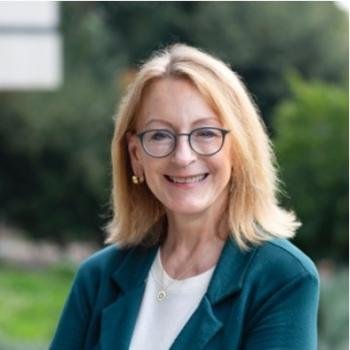
Karen Adams
A worried Arends quickly made an appointment with Karen Adams, MD, clinical professor of obstetrics and gynecology and director of the Stanford Program in Menopause and Healthy Aging. Adams is a certified menopause practitioner whose team works with many patients in perimenopause, the three- to four-year phase of hormonal changes before the end of a woman’s menstrual periods
Adams had a reassuring message for her new patient, whose age and symptoms indicated she was experiencing perimenopause: Mental health changes — including unstable moods — are common in perimenopause. It’s a normal event for half the world’s population, and it can cause a lot of discomfort, but women like Arends deserve appropriate medical care to ease their symptoms. And even though shortages of appropriately trained physicians make it hard to find the right care, effective treatments are available.
“Dr. Adams told me ‘You’re not crazy. This is hormonal imbalance. It’s something that is happening within your body, and is common in perimenopause,'” Arends recalled. “She put me at ease and made me feel very hopeful.”
Dr. Adams told me ‘You’re not crazy. This is hormonal imbalance. It’s something that is happening within your body, and is common in perimenopause.’ She put me at ease and made me feel very hopeful.
A woman reaches menopause when she has not had a menstrual period for a year, which happens on average at age 51. Before this milestone, in perimenopause, people experience irregular menstrual periods and large fluctuations in the reproductive hormones estrogen and progesterone. The hormonal changes can affect mental health
“The reason it’s so distressing is that it’s 100% unpredictable,” Adams said. Unlike in premenstrual syndrome, which causes some women to feel moodier in the days before their period starts, perimenopausal mood symptoms follow no predictable timeline
“Because hormonal control is dysregulated, the highs are higher and the lows are lower,” Adams said. “A woman will get up from day to day literally not knowing how she’s going to feel. People feel out of control and think something really scary is happening.”
That’s why knowledge is key, Adams said. The relief that Arends felt upon learning of the connection between mental health and perimenopause is common among her patients. “When I talk to people about this, they cry because they’re so relieved there’s a reason this is happening and it’s not just in their heads,” she said
Arends said Adams told her, “‘You’re not damaged or weak.’ I think I really needed to hear that.”
[She said] ‘You’re not damaged or weak.’ I think I really needed to hear that.
Everyone who menstruates eventually reaches menopause, and most women experience some uncomfortable side effects during this transition. After loss of menstrual periods, the most common menopausal symptoms are hot flashes and night sweats, which affect about 80% of women, and unstable moods, affecting 68% of women. Sixty percent of women experience sleep disruption and about half experience vaginal symptoms and joint or musculoskeletal pain.
But for those with a history of mental health conditions, such as major depression, premenstrual syndrome or postpartum depression, those fluctuations are even more common than in the general population of perimenopausal women, Adams said, noting that the severity of mood symptoms varies from person to person
“For some people, it’s just a bit of irritability and feeling like they have a shorter fuse,” she said. “And for others it’s tearfulness or feeling like they don’t enjoy things they used to enjoy.”
Although fluctuations in reproductive hormones can be the sole cause of perimenopausal mood changes, physicians should rule out other causes, including major depression, anxiety and panic disorders. They should also screen for the reemergence of bipolar disorder and schizophrenia in those previously diagnosed with these conditions, Adams said
Checking for thyroid dysfunction — which can produce depression-like symptoms — as well as long COVID and rheumatologic diseases such as arthritis may also be needed in a patient’s workup, since their symptoms often overlap with those of perimenopause
“It is really important for women to recognize that this is a time of life they might not be feeling especially well, and that they need to seek out care,” Adams said
For patients without other conditions, the first-choice treatment for perimenopause symptoms, including unstable moods, is menopausal hormone therapy, previously known as hormone replacement therapy
MHT has been demonstrated to have many benefits for women’s physical and mental health if it is started at the right time and used correctly, Adams said. But among many physicians, confusion persists about whether MHT is safe
“Back in 2002, the Women’s Health Initiative — a large trial of MHT — told us that women who were on combined hormone therapy consisting of estrogen and progesterone together had higher rates of heart attacks, strokes, clotting events and breast cancer,” she said
However, further research clarified that these harmful effects were primarily seen in women who started hormone replacement therapy a decade or more after menopause
“We now know that when you start hormones in someone older, in their 70s, it destabilizes the plaques in the coronary arteries and heart, and adds to their risk rather than lowering it,” Adams said
The good news is that women who begin hormone therapy when they are perimenopausal or within 10 years of their last menstrual period can experience a wide variety of health benefits from MHT. These include reductions in cardiac risk; lower rates of lung and colon cancers; better bone density with lower rates of hip fracture; and possible protection against dementia
Some hormone regimens even lower the risk of breast cancer. If they start MHT at the appropriate time, some benefits persist when women continue hormones past age 65, according to new research out this month in the journal Menopause
Hormone replacement therapy also has an impressive ability to steady a patient’s moods, as Arends learned from experience
At Arends’ first appointment, Adams explained that she was a good candidate for MHT and offered different treatment options. Arends opted for a combination of progesterone — from an intrauterine device, with the potential benefit of stopping her periods — and estradiol, a bioidentical form of estrogen delivered through a skin patch. Arends scheduled a follow-up appointment to check in after she had been on the hormones for a few months.
“By the end of the first month, I felt much more like myself,” Arends said. “I wasn’t feeling major mood shifts. I had no more random crying. I felt amazing.”
The straightforwardness of the treatment surprised her. “I thought this was going to be a much more difficult process with a lot of trial and error,” she said. “It was simple, and the impact has been life-changing.”
In contrast to patients with major depression, who often must try different antidepressants to find the right drug and dose, “When people experience mood symptoms in perimenopause and early menopause, estrogen works most of the time,” Adams said
- HOPE AMID CRISIS: The new issue of Stanford Medicine magazine reports on emerging research and innovative treatments to improve mental health.
Adams and her team are expanding access to evidence-based menopause treatments
“The reality is most people go through menopause without medical care, but not because they don’t want or seek out care,” Adams said. “It’s because, in many locations, expert menopause care isn’t available.”
Historically, physicians have received little or no training on menopause care, with most medical residents reporting that they received one lecture or less on the subject during the entirety of their training, according to a 2019 study
“When women go to their doctor, they may be told ‘Well, this is aging, and get used to it, it’s your new normal,’ or they ask about hormones and are told, ‘Oh no, you can’t take that, it’s dangerous,'” Adams said, noting that the evidence base on how to use MHT safely has still not been widely disseminated among medical providers
When women go to their doctor, they may be told ‘Well, this is aging, and get used to it, it’s your new normal,’ or they ask about hormones and are told, ‘Oh no, you can’t take that, it’s dangerous.’
The Stanford Program in Menopause and Healthy Aging brings together specialists from many fields to provide care for women before, during, and after menopause. In addition to treating individual patients, they aim to lead the field in menopause research and advocacy; provide conferences, webinars, and vodcasts to update the knowledge of current providers; and train the next generation of health care providers. Their overarching goal is to put Stanford Medicine at the forefront of precision menopause care in the U.S. and around the world.
“We are scaling up our expertise,” Adams said, noting that at present, worldwide, there are only 1,800 certified menopause specialists — clinicians who have completed specialty training and passed a certification exam in menopause care. (Many certified providers offer services through telehealth, an option Adams recommends for women seeking menopause care in rural areas where local specialists are not available.)
“Menopause is a normal human experience, but it’s also a time of dysregulation of multiple organ systems that lead to significant symptoms and increased vulnerability to chronic illness,” she said. “We can positively impact a woman’s long-term health trajectory, not to mention her immediate quality of life, by intervening in a very simple, targeted, effective way.”
Photo: Emily Moskal
