


This burden is intensifying industry interest and research into practical ways to improve both sleep and stress resilience, prompting new supplement studies across adaptogens, minerals, probiotics, carotenoids, melatonin and amino acids
While the latest evidence is far from uniform, it suggests that several ingredients show promise for improving perceived sleep quality, stress or sleep continuity but that many findings remain preliminary, population-specific or unsupported by consistent objective outcomes
Overall, the current state of the science suggests that a restful night’s sleep may depend less on a single breakthrough ingredient than on increasingly targeted formulations, sustained-release delivery and personalized approaches that account for stress, age, circadian timing and individual sleep concerns
A research team from Arnold School of Public Health at the University of South Carolina evaluated the impact of morning adaptogens, evening sleep-focused supplements, and their combination on stress, mood and subjective and objective sleep quality
Their double-blind, placebo-controlled trial recruited 103 healthy, physically active adults and assigned them to one of four treatment groups: 1) active morning (AM) and active evening (PM), 2) active AM and placebo PM, 3) placebo AM and active PM and 4) placebo AM and placebo PM. The AM group contained 600 mg ashwagandha (NooGandha) and 300 mg Rhodiola rosea. The PM group contained 2 g magnesium L-threonate (Magtein), 200 mg L-theanine and 50 mg apigenin (from grapefruit).
“Morning supplementation with adaptogens (ashwagandha and R. rosea) was associated with improvements in subjective stress, sleep quality and positive affect following 14 days in healthy physically active adults as compared to the placebo product,” the researchers wrote in The Journal of the International Society of Sports Nutrition. “Minimal effects on other outcomes may reflect limited benefits in healthy individuals over a short supplementation period.”
Finished products were supplied by supplement brand Momentous, which provided financial support for the study
According to a systematic review of randomized controlled trials published in The Journal of Dietary Supplements, the evidence supporting magnesium as a sleep aid is inconsistent and of low certainty, with modest benefits reported only in certain populations
While magnesium supplements have seen a surge in consumer interest and market growth, especially for relaxation and sleep, the review highlighted variability in study quality, magnesium formulations and populations studied
“Our review doesn’t establish that magnesium is ineffective,” said Adrian Lopresti, lead author on the study and managing director at Clinical Research Australia. “Rather, the available clinical evidence is inconsistent, and we cannot yet confidently recommend it as a routine treatment for insomnia.”
He added that though anecdotal reports of benefit should not be dismissed, they cannot substitute for robust clinical evidence and that further research is needed to determine which individuals may benefit most, in addition to clarifying the effectiveness of specific magnesium forms
Opens in new window
A Columbia University review examined 29 studies on carotenoids and sleep, including 11 human intervention trials, finding some evidence that carotenoids like lutein, zeaxanthin and saffron-derived compounds may improve certain sleep outcomes, though results were inconsistent and not conclusive compared to placebo
Preclinical studies indicated that select carotenoids improved sleep-wake cycles, increasing total sleep and non-REM sleep duration while decreasing wakefulness in a dose-dependent manner
“Future research should prioritize well-designed dose–response human intervention trials evaluating individual carotenoids from both whole foods and dietary supplements, with standardized sleep outcomes and sufficient population diversity to identify potential differences in response,” the researchers wrote in the journal Nutrients.“Carotenoid-rich foods may continue to be encouraged within existing healthful diet recommendations but should not be specifically prescribed as a strategy to improve sleep until efficacy is established.”
Opens in new window
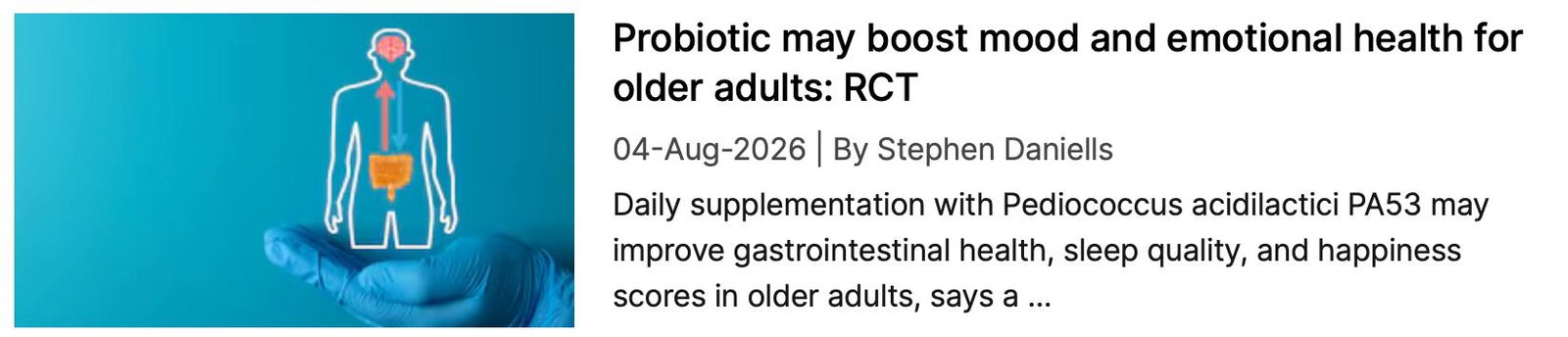
Daily supplementation with Pediococcus acidilactici PA53 for eight weeks may improve gastrointestinal health, sleep quality and happiness scores in older adults, according to data published in The Journal of Nutrition
The randomized, double-blind, placebo-controlled trial, carried out in adults between the ages of 55 and 70, reported significant reductions in inflammatory markers IL-6 and TNF-alpha, an increase in the anti-inflammatory IL-25 and positive shifts in gut microbiota composition. While trends toward improved mood and sleep were observed, not all psychological measures reached statistical significance.
“Pediococcus acidilactici PA53 emerges as a safe and effective intervention for enhancing digestive function and modulating inflammatory pathways in older adults,” wrote scientists from Henan University of Technology and the First Affiliated Hospital of Zhengzhou University in China. “Its ability to enrich beneficial microbiota while suppressing proinflammatory taxa aligns with mechanistic insights from animal studies.”
Opens in new window
A low dose of a Melotime-branded sustained-release melatonin from ingredient supplier Nutriventia may improve measures of sleep, including the total sleep time, falling asleep faster and fewer night-time awakenings, as well as subjective sleep quality and psychological well-being
In a randomized, double-blind, placebo-controlled trial published in the journal Clocks & Sleep,researchers evaluated the effects of 28 days of Melotime supplementation in 59 healthy adults between the ages of 30 and 60 experiencing poor sleep quality
Objective sleep parameters were measured using overnight polysomnography (PSG), while subjective sleep quality and wellbeing were assessed using the Pittsburgh Sleep Quality Index (PSQI) and validated psychological wellbeing questionnaires (WHO-5 Well-Being Index)
Commenting on the study, Dr. Shefali Thanawala, AVP, medical science & research at Nutriventia and lead author on the paper, said the company developed Melotime to address the physiology of overnight sleep, not just sleep onset
“The premise was simple: If melatonin is metabolized too quickly, the benefit is front-loaded and the second half of the night is left unprotected,” she said. “Our sustained-release design was built to correct that problem.”
Opens in new window
A randomized, double-blind, placebo-controlled study involving 80 healthy adults with sleep disturbances but not insomnia found that supplementation with the probiotic Bacillus coagulans IDCC 1201 significantly improved sleep duration, sleep efficiency and reduced wakefulness in adults with sleep disturbances over four weeks
Over four weeks, participants were randomly assigned to receive placebo or a daily probiotic capsule containing B. coagulansIDCC 1201 provided by Ildong Bioscience Co., Ltd, which funded the study. The researchers assessed dietary intake, anthropometrics, sleep questionnaire scales and objective sleep outcomes using polysomnography (PSG) and serum GABA concentrations
Findings revealed that, after four weeks, compared to placebo, the probiotic improved objective sleep continuity and self-reported sleep outcomes, significantly increasing sleep efficiency and duration, as well as stage 2 and REM sleep
The researchers highlighted the strain’s reproducibility, stability and effectiveness in supporting sleep maintenance and continuity compared to botanical alternatives but noted that the study was limited by its short duration, predominantly female sample and lack of microbiome analysis
Opens in new window
Researchers in Taiwan found that four weeks of daily supplementation with ProBeptgen-branded hydrolyzed chicken extract improved perceived sleep quality in healthy adults with sleep issues, specifically enhancing subjective sleep quality compared to placebo
“This study suggests that hydrolyzed chicken extract may improve perceived sleep quality, as reflected in PSQI component scores, among healthy adults with poor baseline sleep,” the researchers wrote in the journal Frontiers in Nutrition. “Although no significant between-group differences emerged for PSQI global scores, improvements in specific components are encouraging and support further evaluation in larger, adequately powered trials.”
They noted that ProBeptigen contains compounds that may influence sleep through GABAergic signaling, sedative effects or the production of serotonin and melatonin bu that the exact mechanisms remain unclear
Suntory, which produces ProBeptgen through a high-pressure, hot-water extraction process of chicken meat, funded the study
Opens in new window
A mini review conducted by researchers from the R&D team at London-based health and well-being company The Water Street Collective examined the latest evidence on L-theanine and its effects on cognition, mood and sleep based on systematic reviews and meta-analyses of human randomized controlled trials
“The strongest evidence to date supports its role in helping individuals cope with stressful situations and in improving sleep quality, however, there is also evidence that it can enhance aspects of cognitive performance (particularly when combined with caffeine),” they wrote in the journal Frontiers in Nutrition
According to the review, current evidence in healthy adults suggests that supplementation with 100 to 400 mg of L-theanine can produce small but statistically significant improvements in aspects of cognitive performance, particularly on visual attention tasks and when combined with caffeine. It also noted reports of reduction in both perceived and physiological markers of stress and anxiety under stress-inducing conditions at doses of 200 to 400 mg/day without causing sedation and indications that supplementation with 200 to 450 mg/day can support sleep quality, with little effect on total sleep duration.
The Water Street Collective, a wholly owned subsidiary of British American Tobacco, sells functional beverage products containing L-theanine under their wellness shot brand, Ryde
A randomized, double-blind, placebo-controlled clinical trial found that daily supplementation with a Prolanza-branded sustained release ashwagandha extract for 60 days significantly reduced stress, improved sleep quality and enhanced overall well-being in 126 healthy adults between the ages of 20 and 55 with moderate stress
Both 150 mg and 300 mg doses were effective, with the higher dose also lowering cortisol levels and reducing stress-related eating behaviors, according to the Nutriventia and Laila Nutra funded study
“Along with revalidating the beneficial effects of Prolanza 300 mg in reducing stress and improving sleep and psychological well-being, this study has additionally demonstrated benefits of Prolanza 300 mg in reducing stress-related eating,” said Shefali Thanawala, assistant vice president of medical sciences and research at Nutriventia
“Importantly, improvements were observed across all these parameters even with the 150 mg of Prolanza. Thus, this study is instrumental in strengthening the scientific evidence for effective use of both doses of Prolanza, while maintaining consumer-friendly convenience and compliance with just one-a-day doses.”
Opens in new window
A scoping review led by Think Healthy Group examined how well the body absorbs glycine from dietary supplements and whether glycine could help explain the sleep-related effects of glycine- and collagen-containing supplements
Published in The Journal of Dietary Supplements, findings indicated that across pharmacokinetic trials, glycine-containing supplement interventions generally increased circulating glycine concentrations, with some evidence of dose dependence
All three glycine sleep trials reported benefits on at least one sleep-related outcome, and among collagen peptide trials, one placebo-controlled trial reported fewer polysomnographic awakenings; one placebo-controlled trial reported lower fatigue scores; and active-comparator studies with alpha-lactalbumin did not show superiority of collagen peptides for sleep-related outcomes
“Overall, current evidence supports biological plausibility for glycine as a candidate mechanism that may contribute to collagen-related sleep effects, but mediation has not been directly tested,” the research team led by food and nutrition scientist Taylor Wallace wrote. “Larger mechanistic trials with standardized sleep outcomes are needed.”
An unrestricted educational grant from Nestlé Health Sciences funded the study
A 12-week study found that supplementing with the Affron-branded saffron extract (Pharmactive Biotech Products) in 86 women between the ages of 50 and 70 experiencing low mood and poor sleep led to greater improvements in depressive symptoms
“Improvements were also observed in self-esteem and sleep-related impairment; however, these secondary findings should be considered exploratory and require confirmation in adequately powered studies,” the researchers from Clinical Research Australia wrote in the journal Frontiers in Nutrition. “No significant group differences were observed for sleep disturbance, perceived physical appearance or estimated facial skin age.”
They suggested that saffron’s antidepressant effects may be linked to its impact on neurotransmitter regulation and antioxidant properties but that its mechanisms and potential benefits for skin quality require further investigation
Opens in new window
Daily supplementation with either a multi-herb adaptogen formula or an ashwagandha root formula from Gaia Herbs over 60 days led to significant reductions in stress, fatigue and anxiety
Data from the randomized, double-blind, placebo-controlled clinical study also indicated that both products were associated with improved mood and sleep quality in highly stressed adults
The multi-herb formulation contained a proprietary blend of Rhodiola rosea root, holy basil (Ocimum sanctum L.) leaf, oat (Avena sativa L.) milky seed, Schisandra chinensis (Trucz.) berry, and ashwagandha (Withania somnifera (L.) Dunal) root, and the ashwagandha formula contained an ashwagandha hydroethanolic extract and an ashwagandha root powdered extract
“While both investigational products demonstrated improvements in stress and fatigue-related outcomes compared with placebo, differences in the timing and pattern of response were observed,” wrote scientists from Gaia Herbs, Vedic Lifesciences and the Kewalramani Clinic in Mumbai
“[The full-spectrum ashwagandha extract product] was associated with greater improvements in stress and sleep quality, whereas [the adaptogen combination product] showed more sustained effects on mood-related outcomes such as depression and anxiety over the study period. These findings suggest formulation-specific benefits.”

Opens in new window
Eight weeks of supplementation with KSM-66 ashwagandha root extract in gummy form may improve cognitive performance and sleep quality in children between the ages of 6 and 12, according to a study published in the journal Frontiers in Nutrition
“The findings suggest that [ashwagandha root extract] was well-tolerated and could serve as a safe, non-pharmaceutical herbal intervention to support cognitive performance and overall well-being in this population,” the researchers from India and Australia reported, noting the results as preliminary due to the small sample size and short duration of the randomized, double-blind, placebo-controlled trial.
Shri Kartikeya Pharma, which manufactures and supplies KSM-66 ashwagandha extract, provided financial support, the test product and a matching placebo for the study

Opens in new window
A randomized, double-blind, placebo-controlled study found that daily supplementation with Verb Biotics’ GABA-producing probiotic Lp815 significantly improved sleep measures in 77% of adults with self-reported sleep disturbances and that 100% of women experienced benefits
Data published in Nature’s Scientific Reports indicated that six weeks of supplementation with the Lp815 significantly increased urinary GABA levels within the first week, correlating with better sleep quality and mood. Oura Ring data confirmed the measurable gains in total sleep, deep sleep and reduced sleep latency
“The GABA-producing probiotic Lp815 may offer a safe and natural option to address symptoms of anxiety, night sweats, sleep disturbance, increase sleep duration and satisfaction in people with symptoms of insomnia,” the researchers from People Science, Verb Biotics and Keller Consulting Group reported
The study confirms earlier data on the strain, published last year in Beneficial Microbes, which indicated that supplementation may reduce anxiety in a diverse group of anxious adults and improve sleep
“Our previous findings of reduced anxiety with 5 billion CFU Lp815 daily appear to extend beyond anxious cohorts to those with sleep disturbance, with women exhibiting stronger improvements than men,” the researchers noted
Opens in new window
Six weeks of supplementation with 2 g of Magtein-branded magnesium L-threonate may reduce brain cognitive age by 7.5 years in healthy adults between the ages of 18 and 45, according to a study published in the journal Frontiers in Nutrition
Researchers in Australia reported that daily supplementation also led to improvements in cognitive performance, memory, reaction time, heart rate and subjective sleep measures
“While the earlier studies demonstrated that Magtein supports cognitive performance in older populations, this latest research confirms those benefits also extend to younger adults and highlights additional positive outcomes related to cognitive function, sleep-related measures and physiological markers of neurological and heart health, including improved heart rate variability, which is demonstrated for the first time,” said Dr. Jennifer Gu, senior vice president of R&D at Magtein.
Opens in new window
A randomized controlled trial investigated heat-treated Limosilactobacillus fermentum PS150 (HT-PS150) for sleep support in 84 adults between the ages of 20 and 60 with sleep issues
The test product is a psychobiotic originally isolated from sausage meat, which has previously shown sleep benefits in animal studies, including increased REM and total sleep and mitigation of caffeine-induced insomnia
In this latest study, participants received either heat-treated Limosilactobacillus fermentum PS150 (HT-PS150) or placebo for eight weeks, wore a sleep tracker each night and completed a daily sleep diary. The researchers evaluated biological samples and assessed primary sleep outcomes using the Pittsburgh Sleep Quality Index (PSQI) and the Insomnia Severity Index (ISI). Secondary outcomes included psychological, quality-of-life, gastrointestinal and overall well-being measures.
While HT-PS150 did not outperform placebo on primary sleep outcomes, it was linked to beneficial endocrine changes, such as increased nocturnal melatonin, decreased cortisol and improved daytime orexin, especially in those with more severe insomnia
“These findings support the idea that HT-PS150 is safe and biologically active in pathways relevant to sleep regulation and that it may hold potential as an adjunctive approach for individuals with mild to moderate insomnia,” wrote researchers from National Taiwan Sport University and other institutions in Taiwan in the journal Nutrients
- Promising, not definitive:Several supplements were linked to better sleep quality, continuity or stress, but results were often preliminary or inconsistent.
- Strongest recurring themes:Adaptogens, sustained-release melatonin, select probiotics and L-theanine showed potential across multiple studies.
- Magnesium remains mixed: Evidence for magnesium as a routine sleep aid is inconsistent and may depend on the formulation and population.
- Subjective and objective results can differ:Some products improved how participants perceived their sleep without producing consistent changes in clinical sleep measures.
- Personalization matters: Age, stress levels, sleep concerns, circadian timing and delivery format may influence who benefits.
