


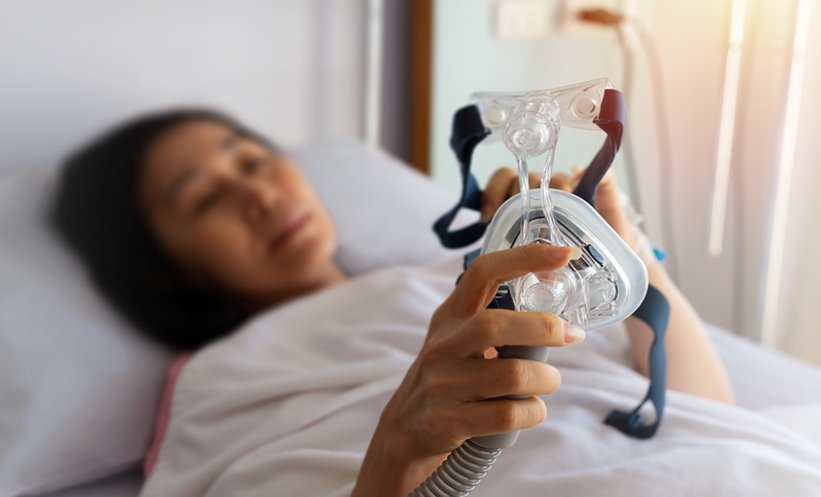
COVID-19 is associated with a significantly increased risk of new-onset obstructive sleep apnoea syndrome (OSAS), according to novel research
In a large retrospective cohort study, researchers found that both hospitalised and non-hospitalised patients with COVID-19 were more likely to develop obstructive sleep apnoea than COVID-negative controls
Obstructive Sleep Apnoea Risk After COVID-19
Researchers analysed electronic health records from 910,393 adults tested for SARS-CoV-2 between March 2020 and August 2024. Participants with a prior diagnosis of obstructive sleep apnoea or inadequate follow up were excluded
Patients were categorised as hospitalised COVID-positive, non-hospitalised COVID-positive, or COVID-negative. Compared with COVID-negative controls, both COVID-positive groups experienced a higher risk of new-onset OSAS. The risk was elevated among hospitalised patients (95% CI: 1.14–1.73) and non-hospitalised patients (95% CI: 1.22–1.46)
The findings were supported by a sensitivity analysis, using a historical pre-pandemic control cohort of 621,046 individuals. The risk of OSAS remained higher among both hospitalised patients (95% CI: 1.73–2.55) and non-hospitalised patients (95% CI: 1.42–1.71)
Subgroups Showed Greater Vulnerability
Subgroup analyses identified several populations with stronger associations between COVID-19 and subsequent OSAS. Among hospitalised patients, the relationship was more pronounced in those under 60 years, Black individuals, and patients with asthma. Among non-hospitalised patients, stronger associations were observed in females, Hispanic individuals, and those with major comorbidities
Vaccination status did not appear to substantially alter the risk of developing OSAS in either COVID-positive group
Cardiovascular Outcomes Following Sleep Apnoea
The study also examined health outcomes after the onset of OSAS. Patients who had been hospitalised with COVID-19 demonstrated a higher risk of heart failure (95% CI: 1.46–3.73) and pulmonary hypertension (95% CI: 1.16–3.39), compared with COVID-negative individuals
Among non-hospitalised patients with COVID-19, the risk of obesity was increased following an OSAS diagnosis (95% CI: 1.03–1.32)
These findings suggest that a SARS-CoV-2 infection is independently associated with an elevated risk of new-onset OSAS. The researchers suggested targeted screening strategies may be warranted in post-COVID populations, particularly among groups identified as being at greater risk
Reference
Changela S et al. Risk of new-onset obstructive sleep apnea up to 4.5 years after COVID-19 in the urban population. Sci Rep. 2026; DOI: 10.1038/s41598-026-56469-7
Featured image: sbw19 on Adobe Stock
Author:
Nonyelum Okonkwo
