


Editor’s Note:Join Lexipol, EMS1 and our partners forFirst Responders Wellness Weekfrom March 23-27, 2026. Each day we’ll focus on a different topic, providing shift briefing videos, webinars, articles, podcasts and more, all within the overarching theme of being “Total Wellness. True Readiness.”Register now
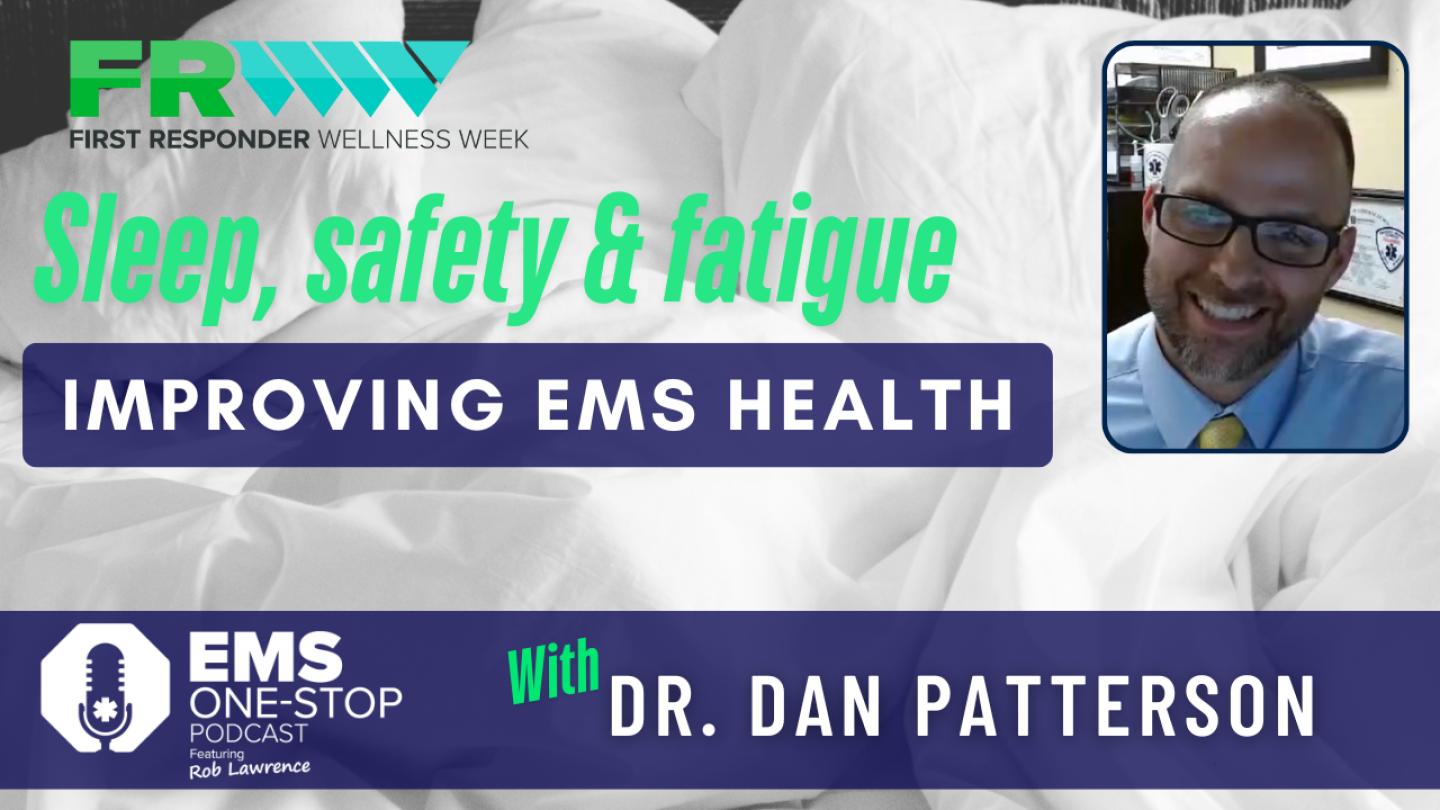
In this episode of EMS One-Stop, host Rob Lawrence is joined by Dr. Dan Patterson, a clinician-scientist specializing in safety in emergency care settings. Dr. Patterson’s work centers around critical factors in EMS safety, such as sleep health, shift work, fatigue and their combined effects on clinician well-being
Drawing on his extensive experience as a paramedic, Dr. Patterson discusses how his research has led to the development of reliable safety measurement tools and baseline data that help identify key areas of concern in EMS safety culture
We explore his contributions to improving safety protocols, reducing workplace fatigue, and minimizing the risk of medical errors and adverse events in prehospital settings
Throughout the discussion, Dr. Patterson emphasizes the importance of understanding the underlying causes of fatigue and sleep disruption in EMS, especially considering the demanding and often unpredictable nature of emergency care work. He also talks about the practical solutions tested in experimental studies that aim to improve clinician sleep health and safety. This episode offers insights into how EMS agencies can integrate evidence-based practices to create a safer, healthier work environment for their teams.
To learn more and download First Responder Wellness Week re
MORE |Tactical napping: An EMS bedtime story
Key quotes on fatigue from Dr. Dan Patterson
- “When we think about safety in EMS, we often focus on patient outcomes, but clinician safety is just as critical. If we don’t address clinician fatigue and sleep health, we’re setting ourselves up for adverse events, both in terms of patient care and clinician well-being.”
- “Fatigue isn’t just about feeling tired. It’s a physiological and cognitive state that directly impacts decision-making, reaction times and the ability to perform under pressure. EMS providers are at a high risk for this, given the shift work and unpredictable nature of our work.”
- “One of the key goals of my research has been to create reliable tools that can measure and quantify safety in EMS settings, so that agencies can not only identify risks, but also track improvements over time.”
- “Interventions to mitigate fatigue in EMS are not just about sleep; they’re about culture, teamwork and leadership. We need a system-wide approach to create environments where EMS professionals can rest effectively, and teams can support each other in managing fatigue.”
- “My research isn’t just theoretical; it’s grounded in the real-world experiences of EMS clinicians. I’ve worked alongside these professionals, and their daily challenges inform every aspect of the work I do.”
MORE |Fighting fatigue in public safety: Strategies to keep first responders alert and healthy
Timeline of key discussion points
00:00 – Introduction to Dr. Dan PattersonDr. Patterson’s background and how his clinical experience as a paramedic informs his research on EMS safety and sleep health
04:30 – The Impact of Shift Work and Fatigue on EMS ProvidersDiscussing the direct effects of fatigue on EMS professionals, including medical errors, cognitive performance and decision-making
10:00 – The Science of Sleep in EMSWhy sleep is critical for EMS personnel and the unique challenges they face in getting adequate rest during shift work
15:00 – Development of Safety Measurement ToolsDr. Patterson explains the creation of safety tools to track fatigue, sleep health and workplace injury rates in EMS settings
20:30 – Experimental Studies and InterventionsOverview of studies testing novel approaches to mitigating fatigue, including practical solutions and interventions in EMS environments
25:00 – Creating a Safety Culture in EMSThe role of leadership and teamwork in reducing fatigue-related errors and fostering a culture of safety in EMS organizations
30:00 – Key Takeaways and How Agencies Can Implement ChangesFinal thoughts on how EMS agencies can integrate Dr. Patterson’s findings and create healthier, safer work environments for their teams
This article, originally published in March 2025, has been updated
EMS One-Stop With Rob LawrenceFirst Responder Wellness WeekFitness & HealthPodcasts
