

Close Menu
Health  JustFineHealth  JustFine

    Subscribe to Updates

    Get the latest creative news from FooBar about art, design and business.

    What's Hot

    The eight-hour sleep rule is outdated, new study suggests. Here’s how much you need

    August 26, 2026

    Friendship may belong alongside diet, sleep, and exercise as a pillar of health

    August 26, 2026

    A Unique Klotho-based Anti-Aging Therapy to Be Introduced at a Premier Longevity Forum: Inside Avaí Bio’s Cell-Based Platform Approach

    August 26, 2026
    Facebook X (Twitter) Instagram
    Health  JustFineHealth  JustFine
    Facebook X (Twitter) Instagram
    • Home
    • General Health News
    • Sleep Health
    • Mental Wellness
    • Fitness & Recovery
    • Health Tech & Wearables
    • More
      • Longevity & Anti-Aging
      • Women’s Hormone Health
      • Gut Health & Microbiome
      • Metabolic Health & Blood Sugar
      • Nutrition & Anti-Inflammatory Foods
    Health  JustFineHealth  JustFine
    Home»Sleep Health»The eight-hour sleep rule is outdated, new study suggests. Here’s how much you need
    Sleep Health

    The eight-hour sleep rule is outdated, new study suggests. Here’s how much you need

    HealthJustfine TeamBy HealthJustfine TeamAugust 26, 2026No Comments5 Mins Read
    Facebook Twitter Pinterest LinkedIn Tumblr Reddit WhatsApp Email
    The eight-hour sleep rule is outdated, new study suggests. Here’s how much you need
    Share
    Facebook Twitter LinkedIn Pinterest WhatsApp Email

    For decades, the answer to “how much sleep does an adult need?” has been simple: eight hours. The idea dates back to the mid-19th century when the notion of eight hours of work, eight for recreation and eight for sleep first took hold

    But growing evidence suggests that eight hours may not be the ideal amount of sleep for everyone, as a new narrative review in Brain Medicine reminds us

    To find out how much people naturally sleep, researchers have studied hunter-gatherer communities whose lifestyles are closer to those of our ancestors and who have little or no access to artificial light. In one early study, researchers found that people in Tanzania, Namibia and Bolivia slept for between 5.7 and 7.1 hours a night. These short sleep durations can’t be attributed to traffic noise, social media use or too much artificial light at night.

    The short nights also seemed to be enough: people did not make up for them with long daytime naps. Without an alarm clock, they tended to wake close to dawn, regardless of the day of the week

    Exactly how long people are found to sleep in pre-industrialised societies varies depending on how sleep is measured, where people live, the season and other environmental factors. But one recent analysis estimated the average to be 6.4 hours

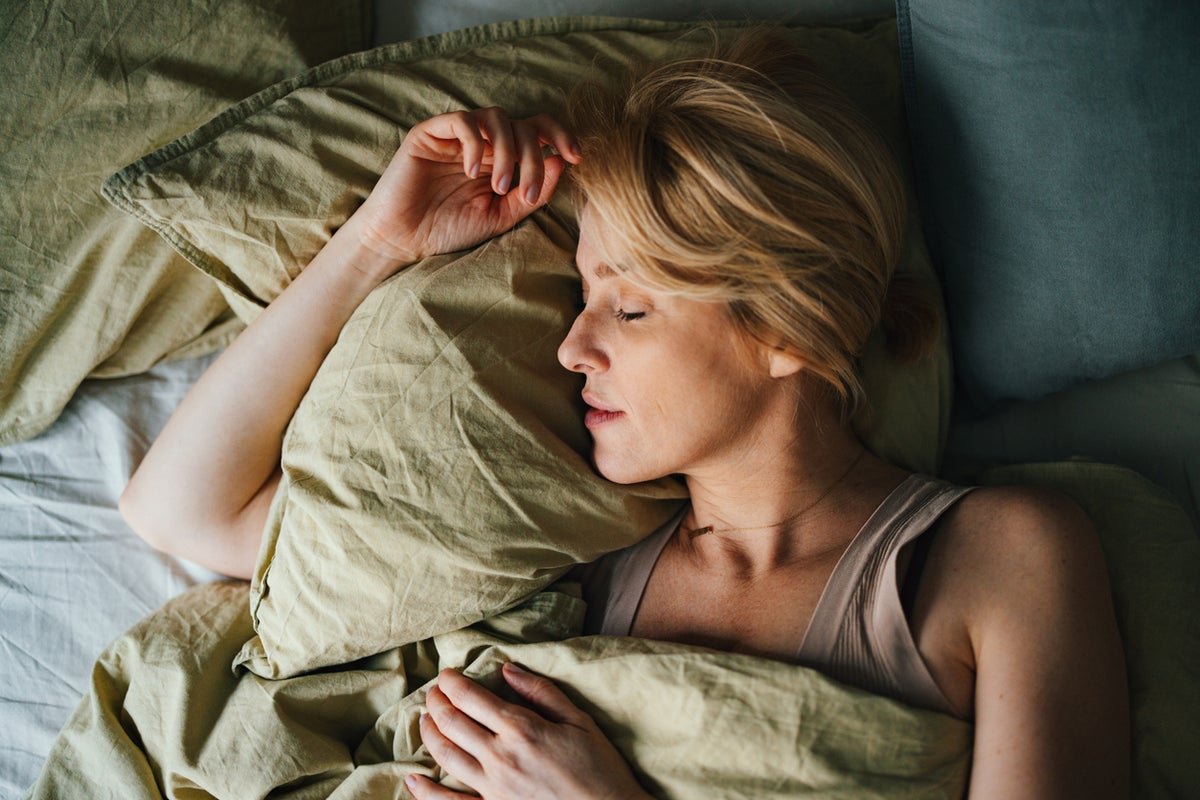
    But growing evidence suggests that eight hours may not be the ideal amount of sleep for everyone (Getty Images)

    So, is eight hours too much? These studies make an important assumption that the amount people naturally sleep is the amount they need. That assumes that hunter-gatherers are free from stress, busy schedules and other pressures on sleep. But is that really the case?

    We also don’t know whether people in these societies experience the same health problems linked to too little sleep that are seen in modern societies. So their shorter sleep may not be as strong an argument against eight hours as it first appears

    But other evidence has emerged from large studies looking at the relationship between sleep and health in industrialised societies

    If we define optimal sleep as the amount linked to the best health, many large studies suggest the sweet spot may be less than eight hours. One recent study used brain and body scans and molecular measures to look at how sleep relates to the ageing of different organs. It estimated the optimal amount to be between 6.4 and 7.8 hours, depending on the person’s sex and the organ being studied

    Many studies find that both too little and too much sleep are linked to poorer health, including heart disease, stroke, cognitive decline and obesity. But scientists are still debating whether too much sleep causes poor health or is instead an early sign of it. Either way, these findings challenge the idea that everyone needs exactly eight hours and suggest that consistently sleeping for much longer may be worth paying attention to.

    However, all these estimates of optimal sleep duration are based on averages, and the average person does not exist. When given enough opportunity to sleep, studies find that young adults sleep longer than healthy older adults. Even people of the same age can need very different amounts of sleep

    Current sleep duration recommendations, from the National Sleep Foundation in the US, reflect these individual differences. It says that adults aged 26 to 64 should get between seven and nine hours of sleep per day, but that sleeping between six and ten hours may be appropriate for some adults. That is a long way from the one-size-fits-all eight-hour rule

    When you sleep matters

    But there is more to sleep than the hours we get. An important feature of modern sleep patterns is not that they are shorter than they once were, but that they are delayed relative to the natural light-dark cycle. Most of us do not wake naturally before dawn. Many of us have short sleep during the working week and longer catch-up sleep on work-free days

    Artificial light is recognised as the main driver of this shift. It changes our sleep habits and delays our body clock, which controls the timing of sleep and wakefulness

    About the authors

    Derk-Jan Dijk is a Professor of Sleep and Physiology and Director of Surrey Sleep Research Centre, University of Surrey. Anne Skeldon is a Professor of Mathematics, Head of School, School of Mathematics & Physics, University of Surrey. This article was first published by The Conversation and is republished under a Creative Commons licence. Read the original article

    Irregular sleep is also common, particularly among shift workers and university students. Irregular sleep is linked to poorer health. But if you lose sleep during the week, catching up on some of it at the weekend appears to be better than not catching up at all – even though it makes your sleep pattern less regular. So regularity matters, but so does the total amount of sleep you get over a week or longer.

    The eight-hour rule is clearly too simple. People need different amounts of sleep, and when we sleep matters too. But one simple message remains: get enough sleep when you can, wherever you can, and don’t worry too much about the occasional bad night

    eighthour outdated rule sleep study
    HealthJustfine Team
    • Website
    • Facebook

    Related Posts

    Friendship may belong alongside diet, sleep, and exercise as a pillar of health

    August 26, 2026

    What doctors want patients to know about women’s sleep health

    August 25, 2026

    Sleep, safety & fatigue: Improving EMS health with Dr. Dan Patterson

    August 25, 2026
    Leave A Reply Cancel Reply

    Don't Miss
    Sleep Health

    The eight-hour sleep rule is outdated, new study suggests. Here’s how much you need

    By HealthJustfine TeamAugust 26, 20260

    For decades, the answer to “how much sleep does an adult need?” has been simple: eight hours. The idea dates back to the mid-19th century when the notion of eight hours of work, eight for recreation and eight for sleep first took hold

    Friendship may belong alongside diet, sleep, and exercise as a pillar of health

    August 26, 2026

    A Unique Klotho-based Anti-Aging Therapy to Be Introduced at a Premier Longevity Forum: Inside Avaí Bio’s Cell-Based Platform Approach

    August 26, 2026

    Whoop Expands Beyond Its Wearable Membership With Blood Tests – CNET

    August 26, 2026
    Stay In Touch
    • Facebook
    • Twitter
    • Pinterest
    • Instagram
    • YouTube
    • Vimeo
    Our Picks

    Expert shares 6 tips to recover faster and stronger after intense workout sessions- Moneycontrol.com

    June 28, 2026

    These Viral Fitness & Wellness Recovery Products Are Taking Over TikTok Ahead of Prime Day

    June 28, 2026

    Life Time Has Created a Fitness and Recovery Paradise – Muscle & Fitness

    June 28, 2026

    The Movement Twenty Four: New 24-Hour Fitness and Recovery Hub Opens Down South

    June 28, 2026

    Subscribe to Updates

    Get the latest creative news from SmartMag about art & design.

    About Us

    Welcome to HealthJustFine.com, your trusted destination for reliable health news, wellness insights, and evidence-based information that empowers you to live a healthier life.
    Our mission is to make quality health information accessible, easy to understand, and relevant for everyone. We believe that staying informed is the first step toward making better decisions about your health, nutrition, fitness, and overall well-being. That’s why we deliver timely updates on the latest medical research, healthy living trends, preventive care, and wellness innovations from around the world.

    Our Picks

    The eight-hour sleep rule is outdated, new study suggests. Here’s how much you need

    August 26, 2026

    Friendship may belong alongside diet, sleep, and exercise as a pillar of health

    August 26, 2026

    A Unique Klotho-based Anti-Aging Therapy to Be Introduced at a Premier Longevity Forum: Inside Avaí Bio’s Cell-Based Platform Approach

    August 26, 2026
    Latest Posts

    Expert shares 6 tips to recover faster and stronger after intense workout sessions- Moneycontrol.com

    June 28, 2026

    These Viral Fitness & Wellness Recovery Products Are Taking Over TikTok Ahead of Prime Day

    June 28, 2026

    Life Time Has Created a Fitness and Recovery Paradise – Muscle & Fitness

    June 28, 2026
    Facebook X (Twitter) Instagram Pinterest
    • About Us
    • Contact Us
    • Terms & Conditions
    • Privacy Policy
    • Disclaimer

    © 2026 healthjustfine.com. All rights reserved. Designed by DD.

    Type above and press Enter to search. Press Esc to cancel.