



A few minutes of scrolling can easily turn into an hour. And before you know it, social media is cutting into the things that matter more: sleep, exercise, work and family time
It isn’t realistic to entirely abandon social media or screentime. But there are ways to set boundaries and recognize when scrolling starts interfering with life
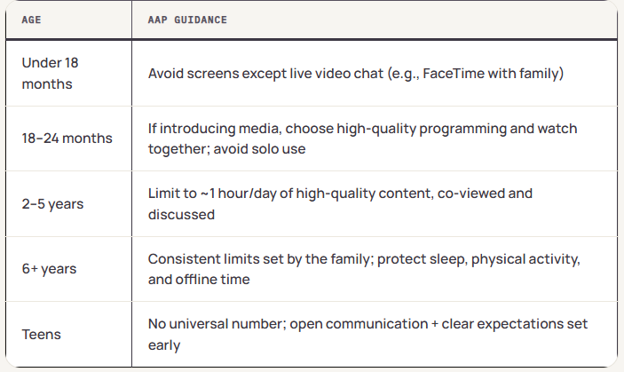
In 2026, the American Academy of Pediatrics (AAP) shifted its guidance around screen use, encouraging parents to focus more on the quality and context of what children are doing on screens, rather than just counting hours
That begins at home with parents modeling healthier choices around social media, said family doctor Dr. Austin Morgan, who treats both children and adults at Novant Health Family Medicine Rocky Point
“It’s not that screentime or social media is inherently a bad thing,” he says. “There’s good that can come from that, but it’s about putting up some guardrails to make sure it’s not taking up too much of our day.”
Here, Morgan addresses how families can check in with each other when it comes to building healthier habits to improve our physical and emotional well-being
Get the best care for you and your family
Physical health
What physical effects come from spending long periods on social media?
Sleep and attention are the big ones. Most of the things we’re seeing on social media are quick videos about something funny. That’s not necessarily a bad thing, but research suggests that kids and adolescents who spend a lot of time on social media have decreased attention. This is not to the point of attention deficit hyperactivity disorder (ADHD), but it can mimic that because you’re training your brain to digest information in snippets. The brain gets used to that and you have a harder time focusing on work.
What amount of social media each day is reasonable?
I hesitate to suggest an exact number of hours, but the key is making sure we don’t have our phones next to our bed. In my counseling, I don’t focus on a particular number of hours. Instead, I’m assessing how many hours you think you’re spending on social media. It becomes a problem when you neglect other areas of your life, like exercise or spending time with family and friends. So that tends to be how I approach the conversation.
How do you begin these conversations about healthy social media use?
For instance, I’ll ask: “You estimate four hours of screentime a day; tell me what that looks like.” And the conversation goes from there. I don’t focus quite as much on the number of hours. I ask, “Are you getting your homework done? Are you getting enough sleep? Are you staying active?” If we’re getting no’s on those answers and there are several hours of screentime a day, that creates a clear picture we need to work on.
Sleep
What signs might tell someone that their social media use, such as doomscrolling, is interfering with their well-being?
The most common one I see is the impact on sleep. Adolescents and adults tell me they have a hard time sleeping at 2 a.m., so they grab their phone and start scrolling. This is very disruptive to maintaining a regular sleep cycle, which of course is super important for young adults as they’re growing and developing. The same goes for adults, who need adequate sleep to function well during the day.
What does staring at a phone screen in the dark do to my overall health?
The part of the brain called the pineal gland produces the sleep hormone, or signal, called melatonin. As part of your circadian rhythm, your brain starts producing melatonin when the sun goes down and tells your body it’s time to feel sleepy. But bright screens can disrupt the production of melatonin and send the wrong signal to your brain
Time and boundaries
What does healthy phone etiquette look like when you’re spending time with family or friends?
Family meals are a great time to put the phone away and make it a rule: no scrolling while we eat together. Consistency is everything. Try not to make exceptions. Parents should model that behavior, which is tough when you want to look something up or you get a text message. But having that protected time as a family is important
What can people do if they find themselves reaching for their phone whenever they’re bored or stressed?
As soon as people start taking their phones out, it’s a social cue that says we’re not engaged. Even as we change and get older, from childhood through adolescence and adulthood, our neurochemistry works in a lot of the same ways. Take the lead by suggesting, “I want to make sure we connect as a family right now. How about we put our phones away and play a game?”
What three questions should we ask ourselves to determine whether our social media habits are healthy?
- How much time am I spending on screens (phone, laptop, TV)?
- Is social media interfering with my health (making it hard to sleep; disrupting interest in exercise)?
- Is social media making it hard to connect with my family, spouse and friends?
Physician-recommended tips for healthier social media habits
- Protect your sleep. Keep your phone away from your bed and avoid late-night scrolling that can disrupt your sleep cycle. Use an alarm clock instead of your phone’s alarm. Keep kids’ phones on chargers outside of their bedrooms at night.
- Focus on balance, not just hours. Instead of worrying about a specific screen-time limit, ask yourself whether scrolling is getting in the way of sleep, exercise, work or time with loved ones.
- Be present with the people you love. Make family meals and get-togethers phone-free. Give each other your full attention, even if it means ignoring a text for a little while.
- Find something else to do when boredom strikes. Instead of automatically reaching for your phone, try playing a game, reading a book, taking a walk or starting a conversation.
- Pay attention to how you feel. Notice whether scrolling is affecting your mood, concentration, sleep or interest in activities you usually enjoy.
- Set boundaries and stick to them. Small, consistent changes can make a difference. Start with one phone-free time or activity each day and build from there. If visual reminders are helpful, go to your smartphone’s “screen time” settings to establish scheduled downtime and app limits.
- Lead by example. Parents can help children develop healthier habits by modeling them, too. Put your own phone away, make time to connect and show that being present matters at every age.
