


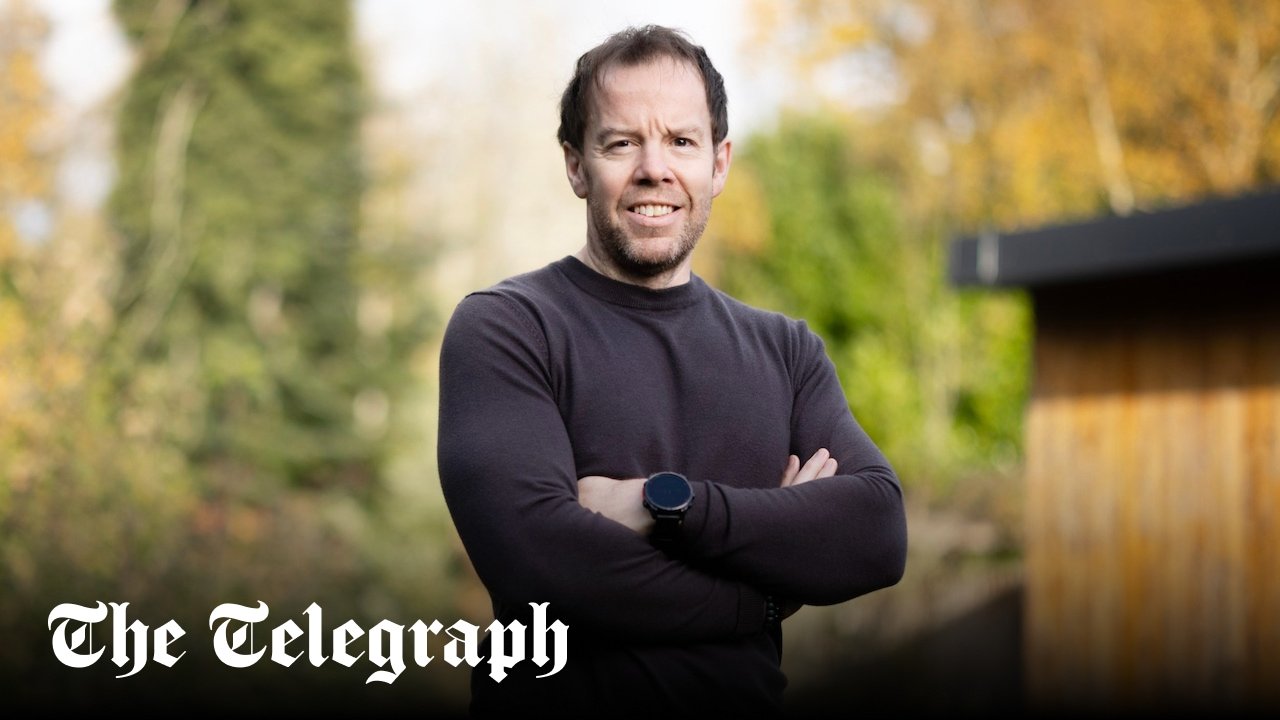
Darren Cassidy, 48, hadn’t been to the doctor in 30 years. The super-fit father of two remained in perfect health, at least in part owing to his relentless exercise routine, which involved 30-minute intense bouts of cycling and weights sessions almost every day
However, that all changed in March, when his fitness watch flagged changes to key metrics of his heart health. These included a spike in his maximum heart rate during exercise, as well as a plunge in his VO2 max score, a key measure of cardiorespiratory fitness. His exercise sessions had become “strained”, when they would usually be classed as “balanced”, according to his watch
“It just didn’t sit right with me,” says Cassidy, whose initial reaction was to take a two-week break from exercise, until his wife pushed him to see his doctor. “I almost felt fraudulent going to the GP, as I didn’t have any symptoms,” the software company chief information officer says. “I took 50 sheets of paper [data from his watch], trying to justify why I’d be taking up an appointment.”
After detecting an irregular heartbeat, his doctor urgently referred him to a cardiologist. Within days, Cassidy was undergoing open-heart surgery to treat damage caused by a heart defect he was born with but had known nothing about
This defect, a bicuspid aortic valve, had caused no symptoms but had forced his heart to work harder than it should and left him at imminent risk of an aortic rupture, a life-threatening emergency where there is a complete break in the main artery that carries blood away from the heart
“If this happened, the consultant told me that it would have caused me to bleed out in a few minutes. He said: ‘You’re lucky you caught this at this point because it’s as serious as it gets.’”

Credit: Geoff Pugh for the Telegraph
If it weren’t for his Garmin watch prompting him to go to the GP “it probably would have been a different story”, he says. “I would have been running the London Marathon and been one of the stories on Monday morning: ‘Fit, healthy man dies during marathon.’”
With around one in five people in the UK now owning a “wearable”, such as a smartwatch, ring or fitness tracker, here’s how they can be life-saving, and the key metrics to check
Cassidy’s story isn’t unique. “Most cardiologists will have had a patient who’s had an abnormal heart rhythm, such as atrial fibrillation, picked up by their wearable device,” says Dr Kevin O’Gallagher, a cardiologist and clinical senior lecturer at King’s College London
A 2026 paper found that the Apple smartwatch was better at detecting atrial fibrillation among patients with a higher risk of stroke than standard care from doctors, such as wearing a medical heart monitor or receiving an electrocardiogram (ECG) in hospital, he notes. Separate 2025 research in the BMJshows that heart arrhythmias detection by Garmin, Apple and Samsung watches are up to 95 per cent accurate, although the paper notes the devices can lead to false positives and overdiagnosis.
“Some patients with atrial fibrillation get palpitations, but they may have no symptoms at all. Sometimes, the first presentation is when they have a stroke, so you can see the obvious benefit of detecting it early.” An early diagnosis will give patients access to blood-thinning medication and procedures that lower the risk of stroke, Dr O’Gallagher adds
Certain wearables can also estimate blood pressure. “The higher your blood pressure, the greater your lifetime risk of heart attack and stroke. If you start treating blood pressure early because it’s been spotted through a wearable, you can potentially prevent these consequences.”
“Some wearables can record an ECG,” says Dr O’Gallagher. Certain Garmin, Apple, Fitbit and Samsung watches have this feature, which can detect abnormal heart rhythms
Some Whoop, Apple and Samsung watches provide an estimate of blood pressure trends. However, they are not classed as medical devices and tend to provide this data as “blood pressure insights” rather than precise blood pressure measurements
“If your wearable gives you an alarm that you’ve had a potential arrhythmia, seek an assessment by a cardiologist,” he says. “It’s important that any wearable data is checked by a medical expert to determine if any other tests or treatment is needed.”
If you notice an unusual trend in other heart health measures, such as heart rate, it can also be worth going to the doctor. “Cardiologists are happy to assess these patients to make sure we’re dealing with prevention rather than picking up the pieces after a missed or late diagnosis. This is true even if it turn out that it’s nothing to worry about.”
Fitness trackers can warn of sleep disorders, like sleep apnoea, which causes breathing to stop and start. “Alerts for sleep apnoea have prompted patients to see me for a formal sleep study,” says sleep scientist Dr Allie Hare, often leading to a formal diagnosis and opening the door to treatment, which typically involves a CPAP machine to regulate breathing overnight
“Left untreated, obstructive sleep apnoea is linked to high blood pressure, heart disease, stroke and type 2 diabetes,” she says. “There is growing evidence of a link with dementia too.”
Trackers, such as the Oura ring, Garmin and Apple Watch, can also report on poor “sleep scores”, such as if patients aren’t spending enough time in the different sleep stages, including deep sleep and REM, she adds. “Getting a diagnosis matters, because most sleep disorders are very treatable.”
The Apple Watch sends alerts if it detects signs of sleep apnoea, Dr Hare notes. Other trackers measure the likes of heart rate variability, oxygen levels and night-time wakings, and “poor” scores for these metrics, or a sudden change, could be important, she says
“Sleep data on its own rarely needs A&E, but go if a reading comes with chest pain, breathlessness, palpitations or fainting. Always check in on how you feel first, before. Treat the data as a nudge to see your GP, not a diagnosis.”
Wearables can anticipate when you’re becoming ill. A 2017 Stanford paper found that trackers accurately detect physiological signs of an infection – through spikes in heart rate, blood oxygen and temperature – before it causes symptoms
For Dr Michael Snyder, a geneticist at Stanford and study co-author and participant, his wearables – he was wearing seven during the study – alerted him to the fact he had become infected with the bacteria that causes Lyme disease
The devices reported a rise in his heart rate and blood oxygen. A fortnight earlier, he had been outdoors in an area where ticks were present. “It gave me an early alert that something was off and prompted me to go to the physician,” he says
He used the data to persuade his doctor to give him doxycycline, an antibiotic that combats Lyme disease. “If I had not been treated, I could have got chronic Lyme disease, which can be debilitating.”
Credit: Franziska & Tom Werner/Tom Werner
Some devices, such as Oura and the Apple watch, flag potential infections, such as Covid and flu, through their apps, though they can’t diagnose a specific illness on their own. You can keep an eye out for illness on trackers by looking at resting heart rate and heart rate variability, Dr Snyder says. “If your heart rate variability drops, there is a problem,” he says
If you’re ill, you should stay at home if possible, he says. This lowers the risk of passing an infection. Do a test, such as a Covid or flu swab, to diagnose the specific bug
Pregnancy causes “profound” changes to the cardiovascular system, says Dr Clare Tower, an NHS consultant obstetrician. “The body has to increase blood flow to accommodate a growing baby, so heart rate rises, as will skin temperature, because blood vessels open up,” she explains. “Women are finding out they are pregnant earlier,” before a test or scan can confirm it, as they are noticing changes in these metrics on their wearables within a couple of weeks of conception, she says.
Fitness trackers can also show shifts in data, such as heart rate variability and body temperature, if a miscarriage has occurred, she notes. “I’ve come across women who say, ‘I was prepared for [bad news] because of changes on my wearable,’” Dr Tower says. “On the other hand, it can increase anxiety and mean that the whole pregnancy experience is more difficult for women.”
While a tracker cannot reliably confirm pregnancy or miscarriage, women have reported changes in their resting heart rate, heart rate variability and body temperature when they fall pregnant or miscarry, Dr Tower says
If a woman suspects she is pregnant from her wearable but doesn’t have a positive test, it’s not worth going to your GP yet, Dr Tower says. If scans or blood tests are offered in very early pregnancy, the results are harder to interpret, which “creates more anxiety”, she says. However, if you suspect pregnancy from your wearable and aren’t yet taking folic acid, it can be helpful to start taking the supplement, which prevents birth defects.
“Don’t rely on your wearable as a diagnostic tool” for miscarriage, she adds. “Still follow the standard advice. If you get pain and bleeding, you must get checked out.”
A 2025 study found that people who use a fitness tracker are more likely to start exercising and seven times more likely to be active still after six months, compared with those who didn’t use one. “There is evidence that providing people with wearables can help them stick to exercise,” says Dr Matt Cocks, co-author of the study and associate professor in exercise physiology at Liverpool John Moores University. He puts this down to being able to monitor improvements in health and inspiring a workout plan. “The wearable can track and motivate you.
“You will improve your cardiorespiratory fitness, which is one of the best predictors of mortality and health that we have,” he says. “It means all of your systems are functioning better
“You’d hope to see improvements in blood pressure, cholesterol, blood glucose control. We know exercise is good for mental health, anxiety and depression.”
“Checking your resting heart rate over time is useful,” Dr Cocks says. A drop indicates that the heart has become stronger, as it is pumping more blood with each beat
“It’s also helpful to check how quickly your heart rate returns to normal after exercise,” he says. “If you can go from 150 beats per minute during exercise to 100 at rest, if that used to take you five minutes and now takes you two minutes, that’s a good indicator that you’re getting fitter.” Improvements in VO2 max – considered the gold-standard metric for cardiorespiratory fitness – is another signal of fitness improvement, he says.
