


Got wearable data? Your doctor can help you connect the dots
Patients can ask their doctors for help decoding their health data from their wearable devices.
Natalia Lebedinskaia/Getty Imageshide caption
toggle caption
Natalia Lebedinskaia/Getty Images
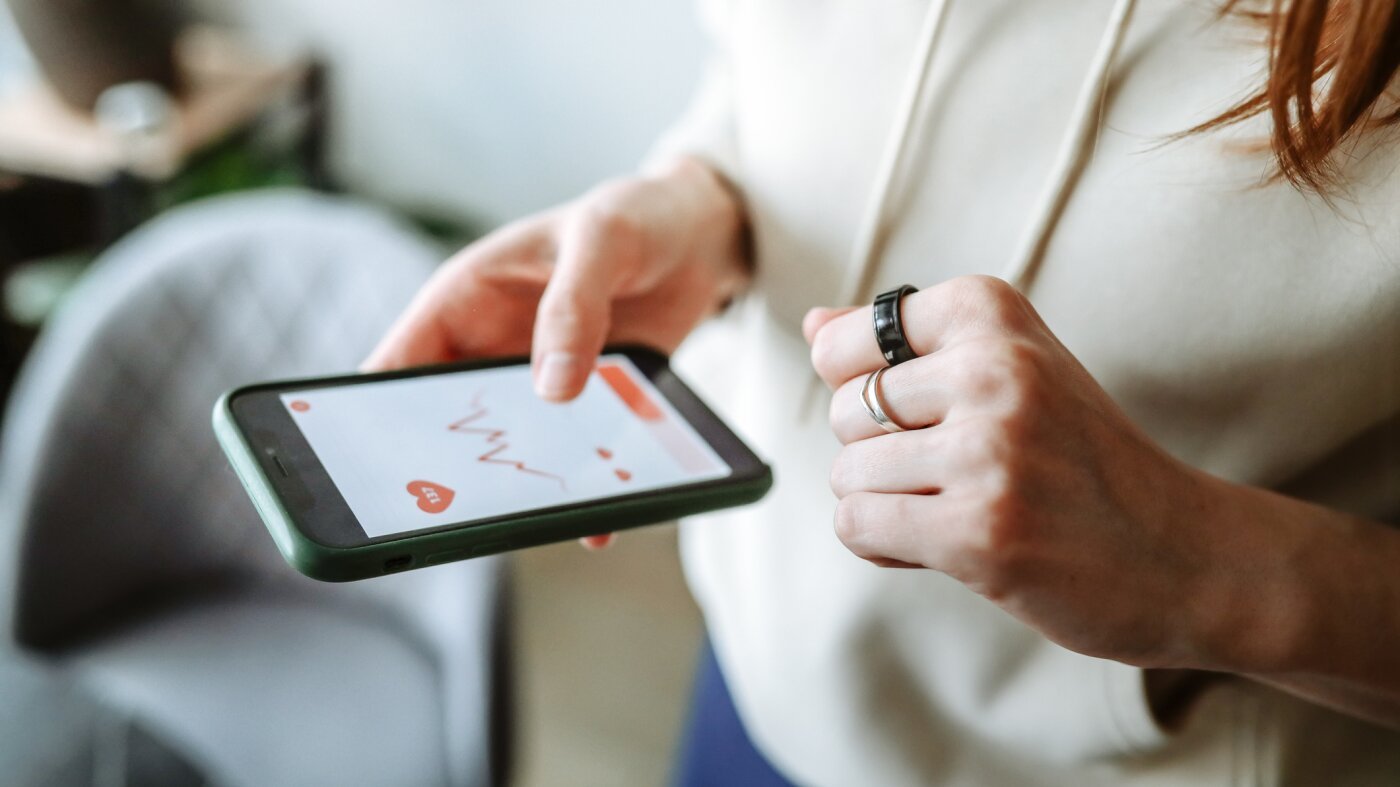
Millions of Americans are strapping on smartwatches and smart rings to track everything from sleep to heart rate to body temperature. Wearable tech is now an estimated $100 billion business. But all those numbers streaming in from your wrist or finger can be hard to make sense of
Here’s how to get the most out of your data, and how to have a productive conversation with your doctor about what it means
How to Thrive as You Age
Here’s how this 87-year-old triathlete keeps her heart strong
Sophie Krupp, who lives in Minneapolis, started wearing an Oura Ring several years ago to help her get a handle on her migraines. She had a hunch that her symptoms were connected to a bigger picture. “I felt like there were these patterns that were really related to my symptoms,” she says, “but I didn’t know how to connect them.”
Once she started tracking her data, she began to draw connections. The quality of her sleep seemed linked to migraine flares. Small temperature shifts tied to her hormonal cycle were also a factor, which was an important eye-opener and was the most consequential factor in connecting the dots. Even an occasional drink of alcohol made a difference. “It was just so obvious how little behavioral changes can have a big impact,” she says.
That kind of self-knowledge is what wearables do best, and it’s a good starting point for any conversation with your doctor
Data with context
Dr. Lucy McBride, a physician in Washington, D.C., and author of Beyond the Prescription, says it’s not helpful to arrive at an appointment with your health care provider with weeks of raw data and no context. Her advice: “Report patterns, not just single data points,” she says. “For example, a week of disruptive sleep after a major life stressor tells a story. One bad day does not,” she says, “so it’s important to connect the data with your life.”
Want the latest stories on the science of healthy living? Subscribe to NPR’sHealth newsletter
“Data without context is just noise,” McBride says. A spike in your resting heart rate means something different if you were fighting a cold, going through a stressful week at work or training for a race
When patients do bring in wearable data, it can help a health care provider see beyond how you’re presenting during an office visit, says Dr. Sarah Benish, a neurologist with M Health Fairview in Minnesota. Benish is the author of new informal guidance from the American Academy of Neurology on wearables. “If one of our patients brings in data from a wearable, it expands how much information we can look at,” she says and potentially helps doctors do their job better. “It helps us decipher what they’re going through with their symptoms and helps us decide on next steps for testing or treatment.”
For Krupp, the wearable data can help predict when a migraine flare may be coming, which gives her a window to intervene and take her medicine before symptoms spiral. And now that she better understands the connection with hormones, she can pay closer attention to changes linked to her monthly cycle. So, the data helped her make the connection, and now she can intuitively pay more attention to what her body is telling her.
Living Better
Heart disease deaths declined. And here’s how to reduce your risk of the #1 killer
Wearables can flag some serious conditions. One of the most impressive things a wearable can do is detect a cardiac arrhythmia, which is an irregular heart rhythm that can increase the risk of having a serious medical incident. “The smartwatches can give a notification that the heart rhythm seems irregular,” Dr. Benish says. “That can be a sign of an underlying heart condition that puts people at risk for having a stroke,” or other types of cardiac events.
Dr. McBride had a patient whose Apple Watch flagged a dangerously low heart rate during sleep. That data led him to a cardiologist and ultimately to getting a pacemaker. “That was potentially lifesaving,” she says
Here are 4 more tips to help:
1. Know how your device works
Whether it’s a FitBit, Garmin, Oura Ring, Whoop band or Apple Watch, these devices are sophisticated computers strapped to your body! It’s important to take time to familiarize yourself with how the device works. When a new software update rolls out, this may influence or alter how the device tracks or displays data, so keep on top of the technology if you want to get the most out of it. Keep in mind that your doctor may not be familiar with your particular wearable, so it may take some time for both of you to analyze the data, given that each device reports and analyzes a bit differently. “What I ask from my patients is just a little bit of grace in figuring out what that data means, ” Benish says.
2. Ask questions
Just as your doctor will want to hear the context of your life and gather more lifestyle information, you’re part of the back and forth, too. This includes asking them about things you don’t understand or need more information about. For instance, “My heart rate variability has been trending lower. Is this something we should look at, or is it normal?” or “I’ve been averaging six hours of sleep, according to my device, but I’m in bed for eight hours, so what’s the possible disconnect?
It’s Been a Minute
Is tech making us too obsessed with our bodies?
3. Is too much data making you anxious?
Finding the sweet spot between helpful information and data overload can be tricky. Some people love knowing all the numbers. For instance, if you often wake up or toss and turn around 2 a.m., and you worry about lost sleep, it can be reassuring to see in the data the next morning that you actually slept more than you thought. But for some people the data is overwhelming. “It causes them anxiety, which can have a significant negative effect on their health,” Benish says. So if you think you fall into this camp, back off how much data you’re taking in and have a conversation with your health care provider.
4. Don’t let your data override your story
Not everything that’s important to our health is measurable by wearable technology. “The most important health data still lives in your biography, your story, your stress, your relationship with food, alcohol, your mother,” McBride says. “Wearable technology over-indexes on data that is measurable, when actually health is informed largely by data that we cannot measure in any device.”
Your numbers matter. But so does your story. Bring both to your next appointment
