



Longevity influencer Bryan Johnson may seem to be the picture of health.
He claims to have spent millions of dollars tracking and streamlining nearly every aspect of his biology so as to radically slow — and even reverse, he claims — aging. He’s undeniably fit, purports to get more than eight hours of sleep each night and boasts a “fertility age” in his early twenties. Johnson is 48.
However, last week, Johnson revealed that he has a chronic autoimmune condition, called autoimmune gastritis. The disease causes “irreversible damage” to the lining of the stomach, he said, and often develops silently and asymptomatically over the course of years. He was diagnosed in May, he wrote, after years of persistently low ferritin, a protein that stores iron inside cells, that his team struggled to explain.
News of his diagnosis comes amid a surge in interest in longevity medicine and therapies, a growing area of research that is trailed by just as much public fascination. But how does someone on a quest to live forever, who meticulously tracks everything from sleep quality and sexual potency to heart function and organ health, suddenly discover a chronic disease that had been slowly progressing for years?
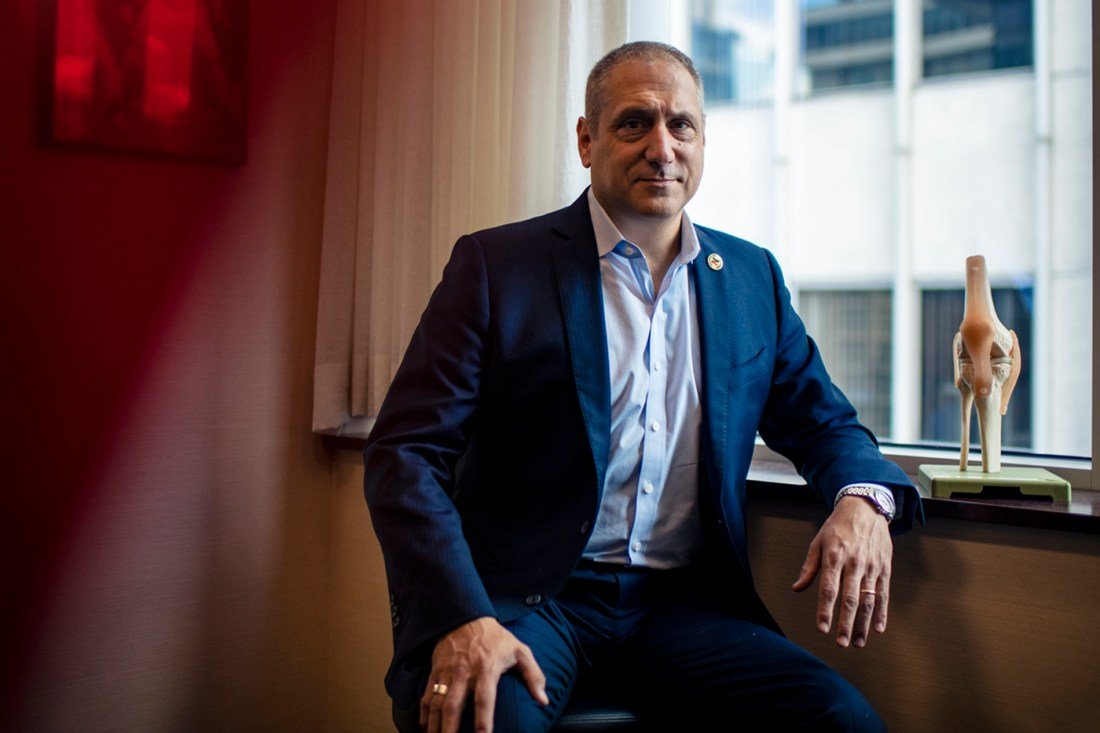
For medical experts and anti-aging researchers, the diagnosis isn’t especially shocking. Autoimmune disorders are quite common, even among apparently healthy and fit individuals, said Dr. Gian Corrado, head team physician for Northeastern University athletics.
So named because the immune system mistakenly attacks the body’s own healthy cells and tissues instead of “foreign invaders,” autoimmune diseases encompass more than 100 known conditions and can affect many systems throughout the body, experts say.
“For most autoimmune diseases, the etiology is unknown, although we know that there are environmental and genetic factors that indicate who would have greater susceptibility,” said Emeka Okeke, an immunologist and assistant professor of biology at Northeastern University
Okeke said Johnson’s illness isn’t fatal, but doesn’t have a cure. It can also increase the long-term risk of developing stomach cancer
Though many such conditions are incurable, most can be managed through select therapies and lifestyle adjustments, he said. Still, Corrado said that, like “neurodegenerative, cardiovascular and metabolic” illnesses, autoimmune diseases can meaningfully impact a person’s “longevity, wellness and quality of life.”
Autoimmune diseases can also arise “de novo,” or without any known cause, Okeke said. Scientists also suspect that inherited genes and environmental triggers, but also potentially infections, can set the disease process in motion, he said.
Those blind spots can leave patients desperate for answers. Many people with autoimmune symptoms spend years looking for explanations that primary care screening can’t always provide, Corrado said. That uncertainty has in part fueled interest in longevity medicine and intensive health tracking, he said, even as it has created opportunities for pseudoscientific treatments to flourish.
“I think the frustration with the ‘autoimmune’ and ‘neurologic’ has yielded some progress, but they also foster desperation among many patients,” Corrado said.
But it’s the patients whose symptoms defy easy explanation who help drive scientific progress to fill the gaps, Corrado said. Though critics of Johnson’s have taken aim at some his anti-aging protocols, Corrado said his larger project is worthwhile in that it is helping draw attention to scientific questions that have received too little attention and funding
The rise of longevity science has coincided with an ongoing revolution in personalized health monitoring. Modern medicine has also made it possible to collect an unprecedented amount of patient-specific health data, with wearable devices, blood tests and advanced imaging offering a more detailed picture of a person’s health, experts say
Johnson is in a unique position to harness those insights: he has spent years conducting what experts describe as a “N-of-1 experiment,” or a continuous clinical trial involving one person. Using his own body as a laboratory for an exhaustive regimen of health tracking and anti-aging interventions, Johnson has tried to determine how much of the aging process can be measured, managed and slowed.
Never before have people been able to collect so much information about their own bodies, yet many diseases still evade detection until they’ve already begun causing damage, said Ram Hariharan, data science faculty member and director of programs for the College of Engineering at Northeastern’s Seattle campus. “Bryan Johnson is arguably the most measured human alive, and this condition still hid from him for years.”
Autoimmune diseases typically develop and progress over the course of years and sometimes decades, beginning with “silent immune misfires” before manifesting in clinical symptoms, according to the Global Autoimmune Institute, a Virginia-based nonprofit devoted to the study and funding of autoimmune conditions.
Although scientists understand how autoimmune diseases damage the body by promoting chronic inflammation, they are still trying to understand why that process begins in many patients, Okeke said
Hariharan, who studies anti-aging research, said N-of-1 health tracking is still limited. Most biomarker “insights,” he said, just point back to the same handful of levers, such as adequate sleep, exercise, diet, stress management and avoidance of smoking and alcohol.
Researchers and patients have become proficient at collecting data, he said, but added that “we’re not yet in a position to engineer our health.”
“The majority of the time, we can only react when a disease shows up,” Hariharan said. “These experiments with one subject can teach you plenty, but it can’t warn you about the thing it’s never seen before.”
