


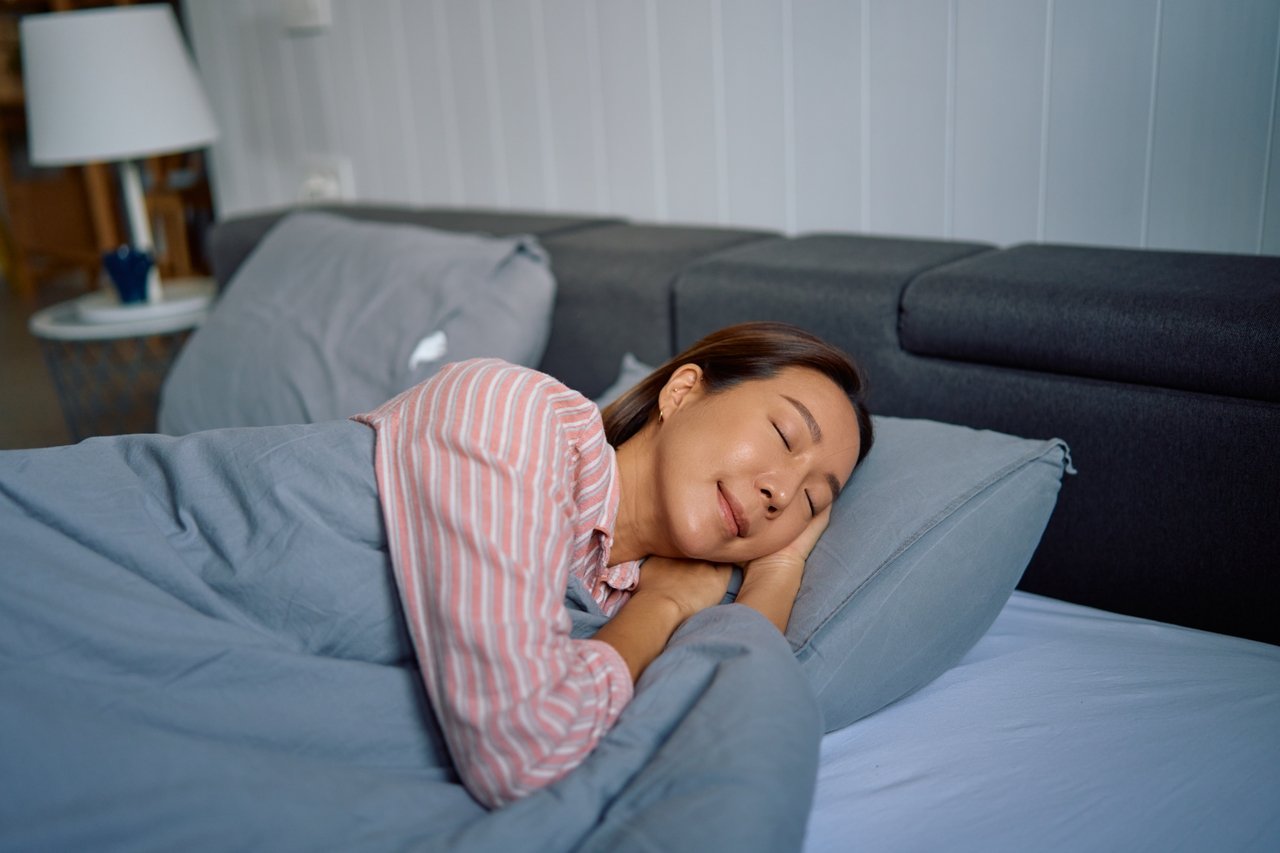
If your partner’s breathing, snoring, movements or middle-of-the-night bathroom trips wake you up, you aren’t alone: 67% of U.S. adults say their partner disturbs their sleep
And many aren’t taking it lying down
A recent study commissioned by the American Academy of Sleep Medicine shows that nearly one-third of U.S. adults sleep apart from a bed partner, either in different beds or in a different room
We had questions: Does it improve sleep? Are there other steps that could improve your sleep more? And how does sleeping apart from your partner affect a relationship?
So we turned to Dr. Meredith Snapp for answers. She’s a neurologist and sleep medicine physician at Novant Health Neurology & Sleep – Midtown who serves as medical director for Novant Sleep Services. Here are some highlights of our conversation
Expert care for more restful sleep
Learn more
Why some people try a sleep divorce
What is a ‘sleep divorce,’ and how often do you see it in your clinical practice?
A “sleep divorce” is when a couple decides to sleep apart to improve sleep quality. It’s an environmental change aimed at improving your sleep
It’s definitely a common practice — probably more common than people realize, because not a lot of people will share that information outside of their doctor visit
I do wish we could change the terminology from “sleep divorce” — which implies that there is a negative impact on the relationship — to something more positive. I like “sleep alliance,” which implies that separate bedrooms is an intentional team effort to support your partner’s well-being and your sleep health. I also like “peaceful bedtime arrangement” — expressing a similar idea, that this is an intentional approach for a positive reason.
What are some reasons that your patients sleep apart?
Getting seven to eight hours of good quality sleep enables the brain and the body to recover and to function well the next day, and helps with weight management, pain management, mood regulation, athletic performance and cognitive health
People with disruptive sleep disorders — like loud snoring, untreated sleep apnea, frequent leg kicks in sleep (called “periodic limb movements”), acting out dreams or sleep talking — can affect their partner’s sleep. In a lot of cases, we can treat the sleep disorder and then the bed partner is happy. But in some cases, when the sleep behavior is not harmful to the person with a sleep disorder, we consider if it’s best fixed by a private sleep environment.
There are also different preferences around sleep environments. Some people prefer to sleep more cool. Some like it quiet — while some prefer a sound machine. Some couples go to sleep and wake up at different times. If there are differences in what you need and prefer in order to get good quality sleep, then you might prefer your own sleep environment
Do you ever recommend a sleep divorce to patients?
It isn’t the first thing that I recommend if someone’s having sleep difficulties
First, I recommend identifying any potential sleep disorder that you or your partner may have, and treating that sleep disorder
If there isn’t a sleep disorder — or if you’re already treating it — then I recommend optimizing your sleep hygiene (keep reading for these tips)
Those are always our first solutions, and we may never even have to consider separate sleep environments if we address those
But sometimes there isn’t anything to fix — some people just sleep better in their own customized environment without the disruption of another individual in the room. It’s possible to need different things than your partner. That’s when it’s important for couples to discuss what’s best for them as individuals and a couple, and make a decision together
How a sleep divorce impacts intimacy and relationships
How does sleeping apart affect a couple?
When couples agree on the decision to sleep apart, I do not find it to be negative for relationships
Getting good quality sleep improves health and mood — a net positive to relationships. Most people in a loving and healthy relationship want their partner to have good quality sleep and be healthy, and in these relationships I find that sleeping apart is usually well-supported if that’s what’s best for the person
What about intimacy?
Before deciding to sleep apart, I think it’s very important that the couple talk candidly about their worries and concerns. They should share what’s best for their individual health and what’s best for the relationship — and how they can achieve both of those things
One thing I like to point out is that actual sleep is a solitary activity. Intimacy can be maintained when you’re awake
What are some of the potential barriers to trying a sleep divorce?
Some people logistically don’t have two sleep spaces — or two optimal sleep spaces — in their home, especially if they have a multigenerational family
Sometimes people worry about what sleeping apart will mean for their relationship. They worry about the stigma, or how it might negatively impact their relationship. Again, this is where an honest conversation is helpful
And some people try it, come back, and say “I would like to find a way to be able to get back into bed with my partner” — so then we think about other approaches
If you’re thinking of trying a sleep divorce
Does a sleep divorce have to be permanent?
Patients I see in my clinic are often experimenting with different sleep and bedtime routines to figure out what works best for them. What worked in a previous stage may no longer work for one or both of you, and that’s OK
Sometimes, sleeping apart can be a good short-term solution while one person is undergoing treatment for a sleep disorder. Perhaps you sleep apart until their meds are working to get the periodic limb movements under control, or until they’ve adjusted to CPAP and it’s controlling their snoring and breathing
If your nights involve heavy childcare duties — like when you have a newborn — I encourage parents to take shifts during the night so that every caregiver gets some uninterrupted sleep. Heavy nighttime childcare may require sleeping apart temporarily. Personally, when I had young children, we slept in every possible sleep configuration to do what the child needed at that particular stage
Pregnancy, perimenopause, and menopause are other temporary stages that can sometimes require different sleep environments
And if your sleep has been disrupted a lot lately you could always try a “sleepcation” — a temporary break from your normal sleep conditions, when you focus on getting good quality sleep. This might involve a break from co-sleeping, staying in a hotel away from children and pets, or other changes focused on getting yourself back on track
How can you start a conversation with your partner about sleeping apart?
If you think sleeping separately is a good solution for you, approach your partner about why you believe this would be beneficial for your health and for both of you
Be open to discussion (and negotiation) about how you can maintain intimacy and a positive relationship while sleeping separately
If you try it and aren’t sleeping better, see a sleep medicine clinician. And see a sleep medicine clinician if you have one of the following symptoms of a sleep disorder:
- Your sleep isn’t good quality.
- Your sleep isn’t refreshing.
- You wake up throughout the night for no apparent reason.
- You can’t fall asleep, or wake up too early and can’t return to sleep.
- You are consistently sleepy in the daytime.
- You fall asleep during the daytime.
- Your partner notices that you snore, gasp for air at night, or pause in your breathing at night.
The bottom line: Whether you’re sleeping alone or together, quality sleep matters
Regularly getting seven to eight hours of quality sleep is foundational to your health and well-being — helping with mood, weight management, cognitive function, recovery and athletic performance
If you aren’t sleeping well, try some of the tips below
Before you try a “sleep divorce,” have an honest conversation with your partner about why you’re trying it, for how long you’re trying it, and how you’ll maintain intimacy and closeness
And if a sleep divorce doesn’t improve your sleep — or you or your partner has any symptoms of a sleep disorder — see a sleep medicine clinician
For better sleep, try these tips
When you make choices to improve your chances of getting enough good quality sleep, you are practicing “sleep hygiene.” To maximize your sleep hygiene, try these tips:
During the day
- Don’t drink caffeine in the afternoon or evening.
- Wake up at the same time every day — even on weekends and vacations.
- Use your bed for sleeping and sex — not for working, watching movies or hanging out during the day.
- Exercise, eat a nutritious diet and maintain a healthy weight.
Before bed
- Don’t drink alcohol before bedtime. In general, limit your fluids for two to three hours before you go to bed.
- Eat earlier in the evening. If you’re hungry before bed, eat a light snack — not a big meal.
- Create a relaxing bedtime routine, like reading, stretching or showering before bed.
- Keep your bedroom quiet, cool, and relaxing. Avoid electronics, including your phone, for at least 30 minutes before bed. Go to bed when you’re already feeling sleepy.
- If you’ve tried to fall asleep for 20 minutes and you can’t sleep, get up and do something quiet, like reading or a crossword puzzle. Don’t turn on a lot of lights or use electronics.
If these tips don’t help you get a good night’s sleep, see a sleep medicine clinician
