


After consulting with a renowned sleep doctor, one health writer had some of her biggest assumptions about sleep challenged
“How do you think you sleep?”
As a 39-year-old mom of three girls—ranging in age from 2 to 9—that’s a loaded question
So when I was asked this exact question by Chris Winter, MD—a board-certified sleep medicine and neurology specialist who works with some of the world’s top professional athletes—I laid it all out there: I thought I had a pretty good handle on my sleep. I go to bed around the same time every night—unless I have some writing to do—and I’ve been tracking my sleep with an Oura Ring for around seven months.
I go to my local boot camp four to five days a week, but still like a glass of wine (or two) when my husband and I finally have time to wind down in the evenings. Sometimes the kids sleep great, sometimes they’re standing over my bed at 2 a.m. I thought I was doing OK, but I was sure there was plenty I needed to work on…right?
His answer wasn’t nearly as simple—or as predictable—as I expected
As a renowned sleep doctor who’s consulted for some of the most iconic sports franchises (including the Boston Red Sox, Los Angeles Dodgers, Chicago Bulls, and Cleveland Cavaliers), I went into my consultation with Dr. Winter expecting to hear about rigid bedtime routines, the importance of tracking REM and deep sleep, and possibly a stern warning about screentime before bed
Instead, I walked away with one key thought: What if I was thinking about sleep all wrong?
Below are the five most surprising takeaways from my sleep consultation with Dr. Winter—and the unexpected lessons I’m taking with me
1. Your insomnia might be an expectation problem—not a sleep problem
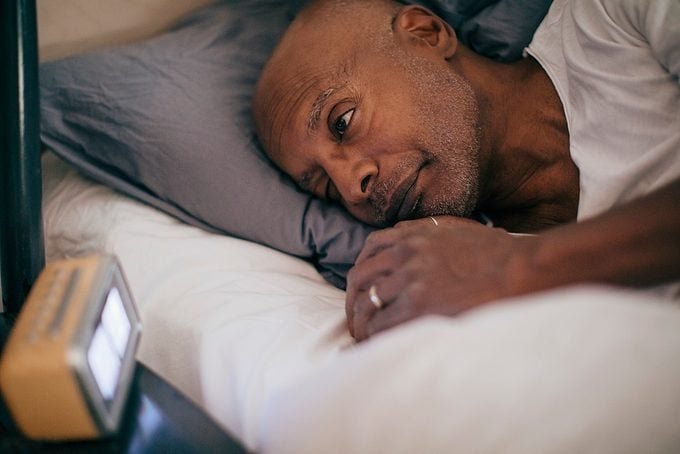
But Dr. Winter challenges the idea that insomnia is simply the inability to sleep—he suggests it’s a mismatch between how we think we should be sleeping and how we actually sleep
“When you define insomnia, it [describes] a person who can’t sleep—no such thing,” he says. “Insomnia means a person is not sleeping the way they’ve determined they would like to sleep.”
He breaks down insomnia into two parts: Part A is that your sleep didn’t go the way you planned. Part B is that you’re upset about part A
“If there’s no part B, there is no insomnia,” he says. “Meaning, if I meet somebody at a dinner party and they say, ‘It takes me two hours to fall asleep every night,’ my first question is, ‘How does that make you feel?’ And if they say, ‘I don’t care,’ then they don’t have insomnia.”
His overall point certainly challenges conventional thinking: Being awake is not, by itself, insomnia. Rather, it’s the distress we feel over being awake that defines it
Ultimately, he says being awake at night isn’t something to fear or stress over—it’s simply a normal part of the sleep experience. “A great sleeper is equally happy in bed awake as they are asleep,” he says
2. Screens can be part of a healthy bedtime routine
After mentioning that I often play Candy Crush in bed to drift off, I quickly added, “But I know you’re not supposed to do that.”
His response caught me off guard, to say the least: “As long as it’s not addictive and has a set start and finish, [habits like that] can be great.”
Rather than dismissing screens altogether, Dr. Winter says it’s more important to consider how you’re using them. A brief, consistent activity—whether it’s a game of Candy Crush or an episode of Jeopardy!—can become part of a healthy bedtime ritual
“Is a television show right before you go to bed the best? Maybe, maybe not—but you’ve created a ritual now,” he says, adding these routines act as “time cues,” helping your brain recognize that bedtime is approaching. Surprisingly, he believes the same concept can help kids, too
“With young kids, anytime you take them out, you have to give warnings [before it’s time to leave],” he says. “I like that idea for going to bed, too. You’re giving them subtle little clues—the lights dim, the temperature comes down, they watch a TV episode, whatever it is. You have little rituals that, in their mind, are telling them it’s time for sleep.”
3. Your child’s bedtime deserves a little freedom
As the conversation shifted to my three young daughters, Dr. Winter revealed an arguably radical approach to sleep: Allow kids a little more freedom at bedtime
He says the goal is to be flexible, not careless, by maintaining a consistent wake time and the same basic bedtime routine while loosening your grip on the exact moment kids fall asleep
I’ll admit—I internally cringed at the idea of letting my 6-year-old choose her own bedtime. But then he explained the actual process
Here’s how it works: Parents start by setting a strict “in your room” time. It’s not necessarily “lights out” time—maybe they read a book or quietly play with toys—but leaving the room isn’t an option. (Unless, of course, there’s an emergency.)
The catch? They still have to wake up at the same time every morning, regardless of how late they stay up. The idea is that kids naturally learn how much sleep they need without bedtime becoming a nightly battle
His overall message to kids isn’t complicated: “Sleep is very important for you. I want you to respect sleep and always put it higher on the list of priorities,” he says. “But it’s not the most important thing, nor is it something that you want to get nervous about if it goes a little sideways.”
4. Stop chasing the perfect amount of sleep
For Dr. Winter, the problem isn’t that people are failing to hit some magic target like eight hours—it’s that they’re trying to force their sleep to fit a number their body may not even need
“If [you sleep] 11 hours and you only need eight, that’s where people struggle with [taking] an hour or two to fall asleep two to three times a week,” he explains. “Or sometimes you’ll wake up, go to the bathroom, and can’t get back to sleep right away—which is your brain essentially saying, ‘Yeah, because we’ve got what we need already.’”
Rather than believing everyone needs exactly eight hours, Dr. Winter says sleep exists on a bell curve. Most people fall somewhere in the middle, but some naturally need more sleep while others need less. Instead of comparing yourself to someone else, he encourages paying attention to the amount of sleep your body naturally settles into over time
Individual sleep needs vary from person to person, and trying to force yourself into the sleep category you think you belong in can backfire. “We don’t really get to choose how much we sleep,” he adds
5. The best thing you can do for your sleep? Stop trying to control it

Throughout my conversation with Dr. Winter, one message kept resurfacing: We have to let go of the urge to control sleep. You can’t out-strategize basic biology—eventually, your brain and body take over
“We say this all the time to our insomnia patients—nobody who is seeking sleep is not getting enough. If you’re trying to work two jobs and you’re artificially depriving yourself of it, that’s different, but eventually you’re going fall asleep—[it might] be while talking your boss or driving your car,” he cautions. “But sleep is an absolute—you can’t sidestep it.”
While we can’t always micromanage when we finally drift off, we can influence our sleep by focusing on the habits we do have a say in: maintaining a consistent wake time, exercising regularly, creating calming evening rituals, and adopting a healthier attitude toward sleep
He adds that we’re slowly abandoning what he calls a “fear-based” economy when it comes to sleep: “I like the fact that research and media is moving a little bit away from ‘eight hours of sleep or you die,’ and more toward focusing on the things that we really can control.”
Part of that means being genuinely OK with what happens after your head hits the pillow: either you fall asleep—or you don’t
As Dr. Winter notes, “If you come to that little zen place, you’re sort of indestructible.”
That brings me back his very first question to me: “How do you think you sleep?” I think I’m doing the best I can—and now with a lot less anxiety. And that’s a very freeing place to be
About the expert
|
For daily wellness updates, subscribe to The Healthy newsletter and follow The Healthy on Facebook, Instagram, and Google. Keep reading:
- Josh Allen Reveals the One Big Way Becoming a Dad Changed His Sleep
- A Recent Study Found This Sleep Position Could Contribute to Glaucoma
- I Tried an Anti-Inflammation Mattress for a Month—Here’s What Happened
- If You Sleep in This Position, You Might Have Better Brain Health, Says Research
