


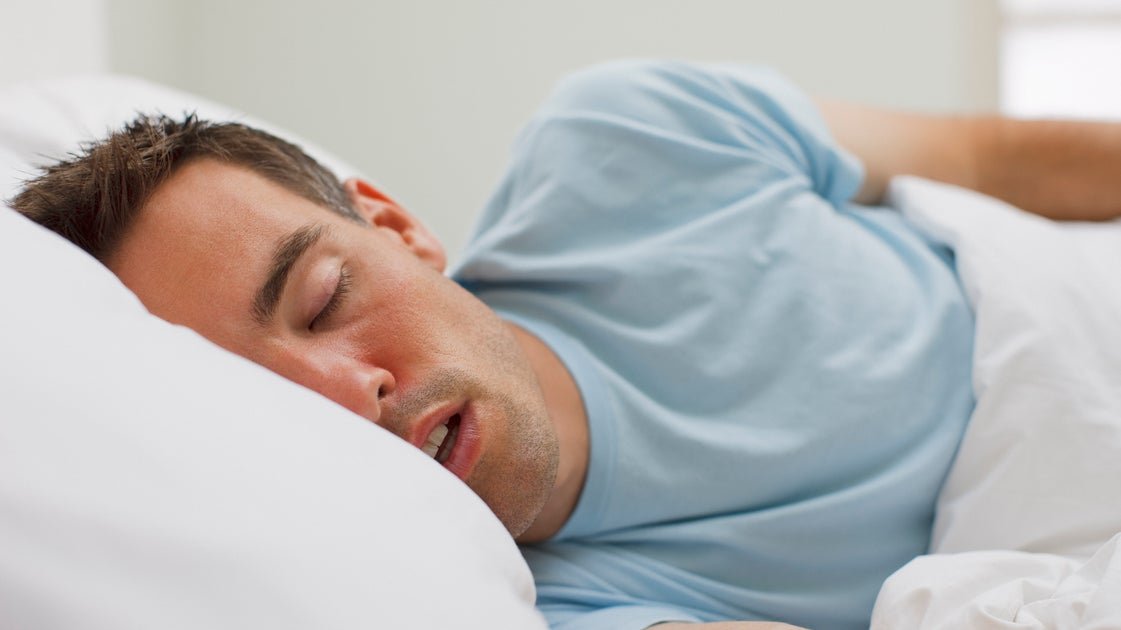
The last time I had a cold, I woke up with my pillow drenched. It wasn’t sweat from a fever. It was drool, still clinging to the side of my face
Fortunately, the only witness to the deluge on my pillow was my dog, Rusty. If he could talk, he’d probably tell you that I drool even when I’m not sick. As it turns out, occasional drooling is completely normal
“People often drool in their sleep because the body keeps making a normal amount of saliva, but we swallow much less while asleep,” Dr. Cynthia Odogwu, a family and lifestyle medicine physician, told HuffPost. That saliva can leak onto our pillow or bedding
For people who are otherwise healthy, drooling is usually nothing to worry about. But in some cases, drooling can be a sign of a health condition or sleep disorder. Ahead, we spoke to Odogwu and other sleep experts about some common causes of drooling and when to be concerned
What are common causes of drooling in your sleep?
Experts say there are several reasons for drooling in your sleep. They are:
Mouth Breathing
Typically, drooling happens because your mouth is open while you’re asleep. “If you’re a mouth breather, that is certainly likely to increase your risk of drooling,” said Chelsie Rohrscheib, a neuroscientist and head of sleep at Wesper. Mouth breathing tends to dry out your mouth. Your body compensates by producing more saliva
Likewise, living in an arid climate or sleeping with a ceiling fan can lead to dry mouth and increased drooling. Some people have an anatomical feature, such as a deo breathe through their mouth, which can cause nighttime drooling, she added
Sleep Position
“Unless they are a 100% back sleeper, most people will occasionally drool in their sleep,” said Alice Hirschel, the head of scientific affairs at Natrol, a sleep and supplement company. Your chances of drooling go up if you sleep on your side or stomach. This makes it easier for saliva to leak out onto your pillow
Sleep Disorders
Some people are prone to drooling due to a sleep disorder that affects their breathing. For example, “people who have sleep apnea stop breathing periodically throughout the night,” Rohrscheib said. Typically, this is due to an upper airway obstruction, resulting in more mouth breathing and drooling while they’re asleep, she said. Hirschel agreed, adding that sleep apnea is a common cause of drooling.
She also said certain lifestyle habits can disrupt your sleep and lead to more nighttime drooling. For example, having a large meal or consuming alcohol right before bed can cause you to wake up more frequently or feel less rested when you wake up
Age And Lifestyle Factors
In children, excessive drooling could mean they have enlarged tonsils or adenoids. Being overweight or having diabetes can put you at risk of developing a sleep disorder such as sleep apnea, Hirschel said. As we age, the muscles that keep our airways open and our mouths closed tend to weaken. In addition, older adults are more prone to neurological issues that can increase drooling, Rohrscheib said.
Cold Viruses And Allergies
Breathing through our nose helps reduce the chance of allergies, flu and colds. That’s because our nasal cavities function by warming, filtering and adding moisture to the air we breathe. “Ideally, most people would breathe through their nose,” Hirschel said. But having nasal congestion from a cold or hay fever can lead to mouth breathing and nighttime drooling
Acid Reflux
It’s common to produce excess saliva when you have acid reflux. When you lie flat, your stomach contents can more easily flow upward and cause heartburn
“When stomach acid travels up into the esophagus, it can kick salivary glands into overdrive,” Dr. Khoshal Latifzai, a longevity physician, told HuffPost. “That saliva helps dilute and neutralize the acid, but it can also contribute to drooling.”
Dental Issues
Certain dental and oral conditions can increase drooling, such as mouth ulcers and infections, Odogwu said. People with an open bite are more likely to drool. This is when your top and bottom teeth do not touch when your jaw is fully closed. Likewise, using dental appliances such as night guards or poorly fitting dentures can cause excessive salivation and nighttime drooling, Rohrscheib said
Neurological Conditions
Some neurological conditions can affect your ability to swallow or keep your mouth closed. “Drooling that is new, heavy and doesn’t go away should be checked by a doctor, because it can point to a health problem such as a nerve condition like Parkinson’s disease,” Odogwu said. In adults with Parkinson’s disease, excessive saliva is one of the most debilitating effects of the disease
Medication Side Effects
You may notice increased drooling with certain medications. For example, Klonopin and Xanax belong to the same class of medications. “However, whereas Klonopin can increase saliva production, Xanax is more often associated with dry mouth,” Latifzai said
In addition, some medications can affect your ability to swallow. “Risperdal, an antipsychotic, can cause increased saliva and swallowing difficulties,” he said. “That two-pronged effect can certainly increase nighttime drooling.” Medications that reduce the swallowing response also include painkillers such as opioid medications, Rohrscheib said
As noted above, your body may compensate for a dry mouth by producing more saliva. “Many antidepressants, some bladder-control medications, and antihistamines such as diphenhydramine, found in Benadryl and some nighttime ‘PM’ products, can dry out the mouth,” he said. “Too little saliva can lead to bad breath, mouth irritation, cavities, and oral yeast infections.”
Tom Merton via Getty Images
When should you be concerned about nighttime drooling?
Waking up to a damp pillow on occasion is normal. “Drooling doesn’t necessarily mean you’re making too much saliva,” Latifzai said. “Oftentimes it simply means saliva is escaping from your mouth rather than being swallowed.”
If you’re concerned about drooling, Hirschel recommended paying attention to changes in your sleep patterns. Let’s say you go to bed at the same time and keep your room dark and cool, but suddenly you notice an increase in nighttime drooling. That’s when you should speak to a doctor
Odogwu added that drooling becomes a concern when it happens often or soaks your pillow or clothes night after night. “Tell your doctor if drooling is new, heavy, or comes with choking, coughing, or trouble swallowing,” she said. You should also seek medical attention if your drooling gets worse, irritates the skin around your mouth or affects your speech
Aside from new or worsening drooling, symptoms such as loud snoring, pauses in breathing, waking up gasping, or significant daytime sleepiness warrant evaluation, Latifzai said. These could be signs of a sleep disorder. “Sudden facial drooping, one-sided weakness, or slurred speech is an emergency,” he said, adding that you should call 911 if you experience any of these symptoms
What should you do?
Maintaining your sleep hygiene and overall health is the best way to address occasional nighttime drooling, Hirschel said. A simple fix is to try sleeping on your back. With seasonal allergies, you can use a nasal decongestant to help you breathe better through your nose, Rohrscheib said. As for tips like using mouth tape or a chin strap to keep your mouth closed, it’s best to speak with a doctor, as there may be a risk of choking or suffocation.
“Many causes of drooling are treatable once found, like a stuffed-up nose, acid reflux, or a medication side effect,” Odogwu said. “Don’t wait to see a doctor, especially if the drooling is new, heavy, or comes with choking, coughing, trouble swallowing, or losing weight without trying.” Whenever possible, keep a log of your drooling, including when it started, the frequency and amount, and any other symptoms such as pain or difficulty swallowing.
In addition to tracking your symptoms, she suggested coming prepared with a list of questions to ask your doctor, such as the following:
- What is causing my drooling?
- Could one of my medicines be causing it?
- Is my drooling a sign of a problem with swallowing or with my nose, throat, or stomach?
- Is spit or food going down the wrong way into my lungs? How can we lower the risk?
- What can help? Are there things I can do at home?
- Should I see a specialist, like an ear, nose and throat (ENT) doctor, a neurologist, sleep specialist, speech therapist or a dentist?
She also recommended telling your doctor if you have a history of chest infections or pneumonia. Repeat infections could mean that food or saliva is going down the wrong way. It’s also a good idea to bring a list of your current medications, so your doctor can review them and determine if any are contributing to increased saliva production or swallowing difficulties
If you suspect that a medication is causing excessive drooling, consider the timing. Did the drooling start after a new medication or a dose increase? “That’s a useful clue, but not a reason to stop a prescription abruptly,” Latifzai said. Suddenly stopping medications like Xanax or Klonopin can cause serious symptoms, including seizures
Depending on what your doctor finds, they might refer you to a sleep clinic. For example, a sleep specialist might use a medical-grade wearable or home sleep testing device to monitor your body temperature, heart rate variability, or the amount of time you’re in deep sleep, Hirschel said
Other tests and next steps include having a swallowing test. “This is usually done with a speech therapist and can sometimes include a special X-ray done while swallowing,” Odogwu said. “They may refer you to a specialist such as an ENT, neurologist, or speech therapist, to evaluate for a throat, brain, nerve or swallowing problem.”
